Enferemería
Vol. 5 Núm. 2 (English)
15 min
Training and experience as hiring criteria for nursing staff in pediatric emergency departments in Spain: a mismatch with international standards
Formación y experiencia como criterios de contratación de enfermería en urgencias pediátricas en España: desajuste con estándares internacionales
Gloria Guerrero-Marquez1, Marta de-la-Hera-Merino2, María-Visitación Ríos-Peromingo3,4, María-Concepción Míguez-Navarro1, Verónica Gonzalez-del-Cerro2 and the Care Working group of the Sociedad Española de Urgencias de Pediatría (SEUP)
Members of the Working Group (Colaborators):
Noelia Cotorruelo-da-Costa5, Beatriz Riera-Hevia6, María-Isabel Muñoz-Bernal7, Noelia Garcia-Prieto3, Natalia Leon-Abio3, Vanesa Utrero-Marín3, Pablo Buck-Sainz-Rozas8 and Ana Martínez-Serrano9
1Pediatric Emergency Department, Health Research Institute of the Hospital General Universitario Gregorio Marañón (IiSGM), Madrid, Spain. 2 Pediatric Emergency Department, Hospital Universitario Puerta de Hierro, Majadahonda, Madrid, Spain. 3 Hospital Universitario Infanta Cristina, Parla, Madrid, Spain. (Note: Includes the Pediatric Emergency Department for the corresponding authors). 4 Universidad CEU San Pablo, Madrid, Spain. 5 Pediatric Emergency Section, Hospital General Universitario Gregorio Marañón, Madrid, Spain. 6 Pediatric Emergency Department, Hospital Universitario Donostia, San Sebastián, Spain. 7 Pediatric Emergency Department, Hospital Son Llàtzer, Palma de Mallorca, Spain. 8 Hospital Universitario Vall d'Hebron, Barcelona, Spain. 9 Hospital Universitario La Paz, Madrid, Spain.
*Correspondencia:
*Gloria Guerrero-Márquez. E-mail: g.guerrero13@gmail.com
Recepción:
15/01/2026
Aceptación:
25/05/2026
Publicación:
26/06/2026
Métricas
139
Visualizaciones
3
Descargas
Compartir
Compartir
Resumen (EN)
Objective: To describe the hiring criteria, training and experience requirements, and initial training offers for nurses joining pediatric emergency departments (PEDs) in Spanish hospitals, and to analyze their alignment with international recommendations for pediatric readiness.
Design: A cross-sectional descriptive study using an ad hoc electronic survey.
Setting and participants: Pediatric emergency departments of Spanish hospitals with different levels of complexity. Nursing managers from 34 PEDs participated (response rate: 52.3 %).
Results: No hospital required a pediatric nursing specialty, specific pediatric emergency training, or prior experience in pediatrics or emergency care as mandatory conditions for employment. Involvement of nursing supervision in staff selection was associated with greater consideration—though not requirement—of these qualifications (p ≤ 0.013). Only 33.3 % of hospitals offered a structured initial training program, and none conducted practical competency assessments before independent practice. In 58.8 % of hospitals, hiring requirements had been reduced in recent years, mainly in emergency areas.
Conclusions: Nurse recruitment into Spanish PEDs generally occurs without requiring specialty certification, prior pediatric or emergency experience, or structured competency-based onboarding. These findings suggest a possible gap between current hiring practices and international pediatric readiness recommendations, which may have implications for patient safety. Additionally, they may support the implementation of dedicated recruitment pools and structured onboarding programs with objective competency evaluation.
Palabras clave (EN):
Professional competence
Personnel selection
Patient safety
Pediatric nursing
Emergency service in hospital
Resumen (ES)
Objetivo: Describir los criterios de contratación, los requisitos de formación y experiencia, y la oferta de formación inicial dirigidos a las enfermeras que se incorporan a los servicios de urgencias pediátricas (SUP) de hospitales españoles, y analizar su alineación con las recomendaciones internacionales de preparación pediátrica.
Diseño: Estudio descriptivo transversal mediante encuesta electrónica autoadministrada ad hoc.
Ámbito y participantes: Servicios de urgencias pediátricas de hospitales españoles de distinto nivel de complejidad. Participaron responsables de enfermería de 34 SUP (tasa de respuesta: 52,3 %).
Resultados: Ningún hospital exigió la especialidad en enfermería pediátrica, formación específica en urgencias pediátricas ni experiencia previa en pediatría o urgencias como requisito obligatorio. La implicación de la supervisión de enfermería en la selección del personal se asoció con una mayor consideración, aunque no obligatoriedad, de dichas competencias (p ≤ 0,013). Solo el 33,3 % de los hospitales ofreció formación inicial estructurada y ninguno realizó una evaluación práctica de competencias antes del desempeño autónomo. En el 58,8 % se habían reducido los requisitos de contratación en los últimos años, especialmente en urgencias.
Conclusiones: La incorporación de enfermeras a los SUP españoles se realiza sin requerir especialidad, formación o experiencia previas, y con procesos de acogida poco estructurados y no evaluados. Esta brecha respecto a los estándares internacionales podría tener implicaciones relevantes para la seguridad del paciente. La implantación de bolsas específicas de contratación y programas de acogida con evaluación objetiva de competencias podría contribuir a reforzar la seguridad y la calidad asistencial.
Palabras clave (ES):
Servicio de urgencia en hospital
Enfermería pediátrica
Seguridad del paciente
Competencia profesional
Selección de personal
Introduction
Pediatric Emergency Departments (PEDs) have evolved in recent decades into environments of increasing technical and care complexity(1). Far from being mere points of care for mild acute pathologies, current PEDs function as intermediate care units where non-invasive respiratory support techniques(2), procedural sedation and analgesia, and the management of patients with complex chronic pathologies are routinely handled(3). In this setting, the premise that a child “is not a small adult” acquires critical relevance: their differential physiological response, the complexity of drug dosage, and the need for family-centered care demand specific and highly qualified professional competence(4).
Internationally, reference organizations such as the American Academy of Pediatrics (AAP) and the Emergency Nurses Association (ENA) have promoted the conceptual framework of “Pediatric Readiness.”(4,5) This model establishes that pediatric patient safety is directly dependent on the presence of nursing professionals with specialized training and accredited experience(1). In Spain, the Spanish Society of Pediatric Emergencies (SEUP) has aligned itself with these international directives through the development of its own “Accreditation Norms and Standards,” which define the minimum personnel and training requirements necessary to guarantee quality care(1,6). However, despite the existence of the pediatric nursing specialty for more than a decade, its actual integration into the hiring processes of PEDs appears to be inconsistent and scarcely regulated(7).
There is a growing concern among clinical managers about a possible gap between these recommendations and the administrative reality(4). The structural shortage of nursing professionals(7) and the rigidity of public hiring systems (frequently based on employment pools that award points for seniority without competency profiling) could be conditioning the incorporation of personnel without specific training or prior experience in the pediatric or emergency area(7,8). This situation could have implications for perceived quality and increase the risk of adverse events related to errors in drug preparation(9,10), triage failures(6,11), or delays in identifying critically ill children(12,13).
Despite the importance of this phenomenon for patient safety, there is scarce data in our country that rigorously describes how the access of nurses to PEDs is managed or what onboarding or initial training processes are implemented to mitigate the possible lack of previous experience(7).
Therefore, the objective of the present study is to describe the hiring criteria, the required training and experience, and the initial training offered to nurses joining Spanish hospital PEDs, analyzing their degree of alignment with national and international standards for pediatric readiness(4,14).
Materials and Methods
A descriptive cross-sectional study was designed with the objective of understanding the hiring criteria for nursing staff in PEDs of different hospitals nationwide. The self-administered survey was primarily directed at nursing supervisors in PEDs, and in cases where their contact was unavailable, to professionals with extensive experience and knowledge of the unit’s operations. The survey was distributed electronically through the professional contacts of the SEUP Care Working Group. The data collection period spanned from March 16, 2025, to July 17, 2025.
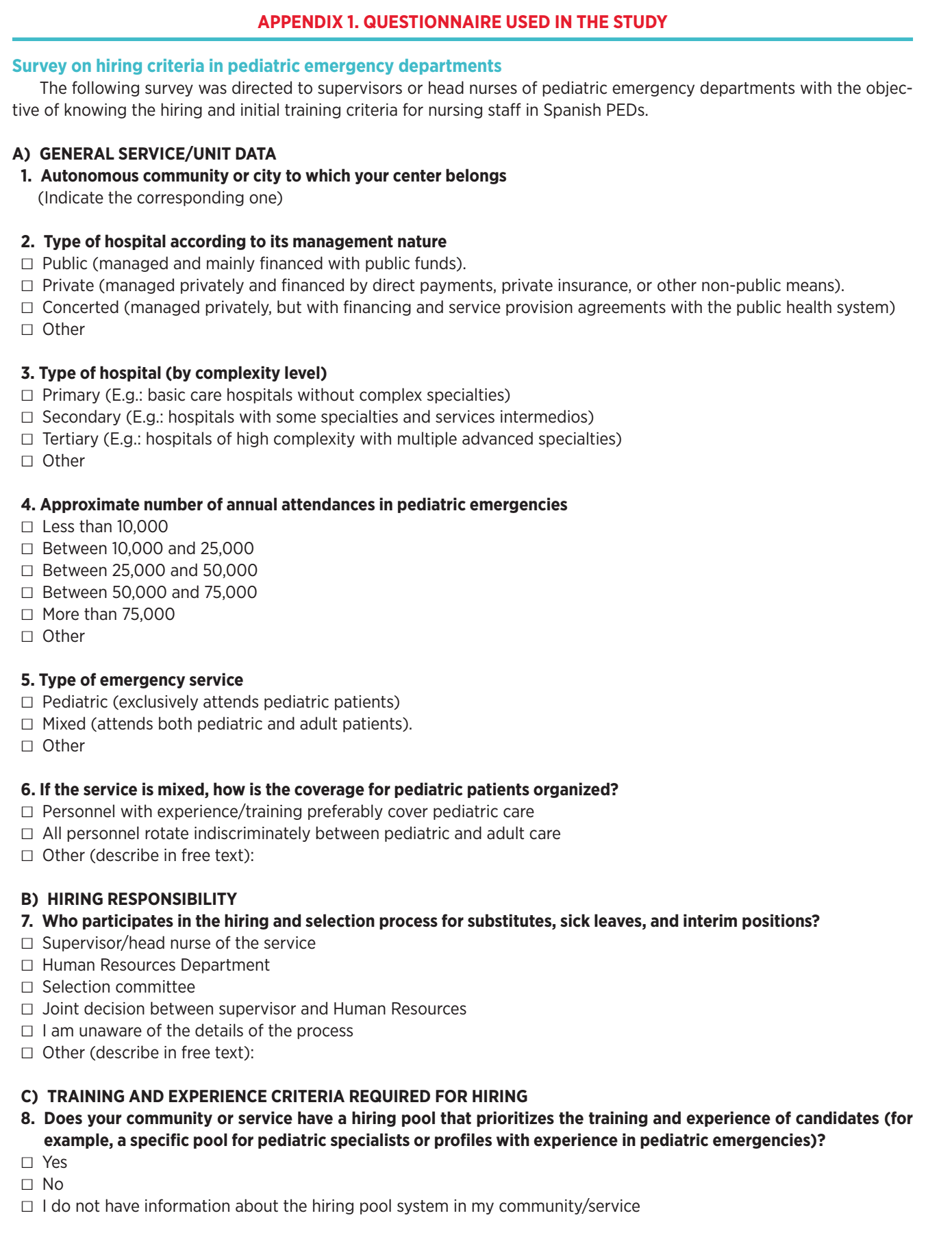
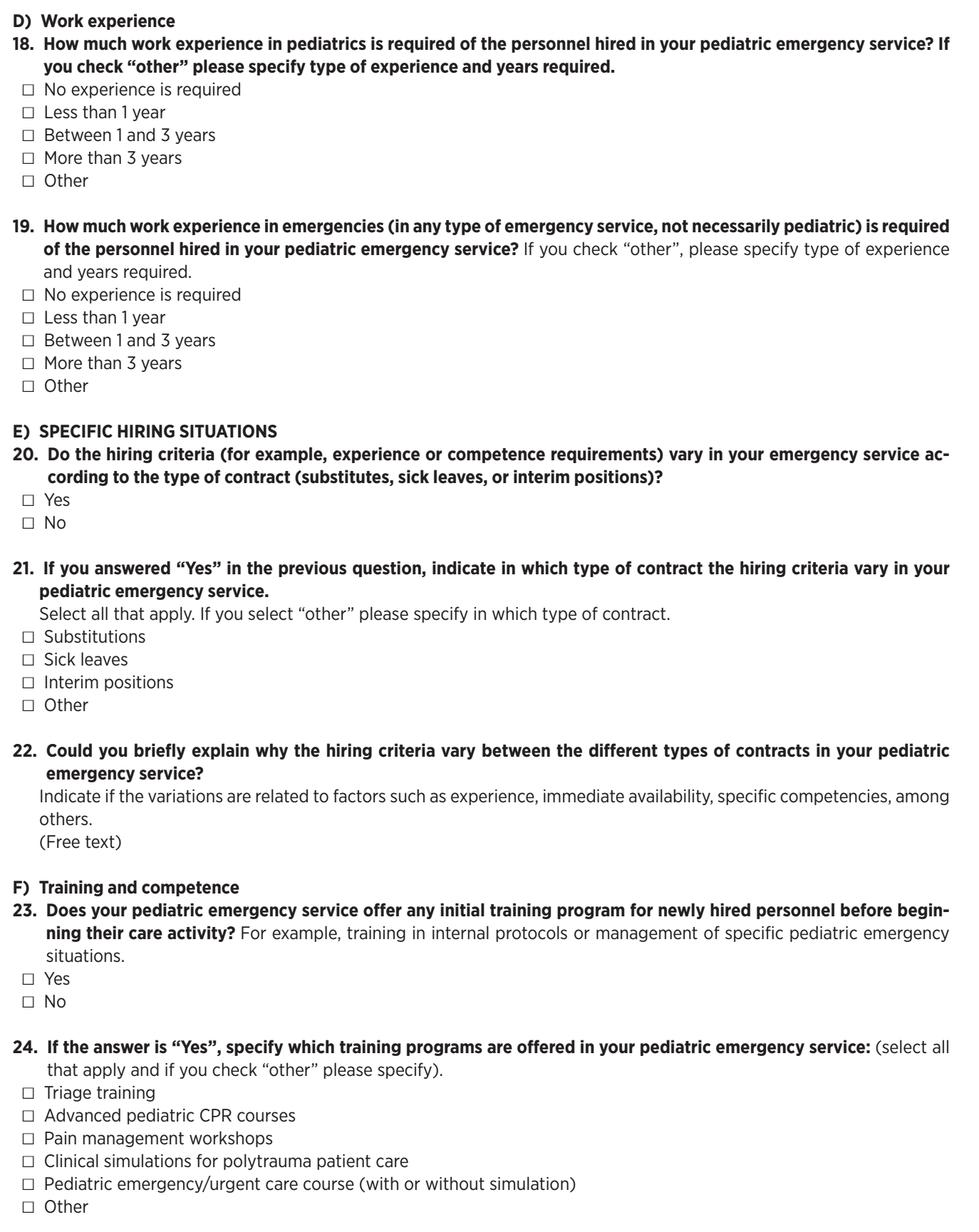
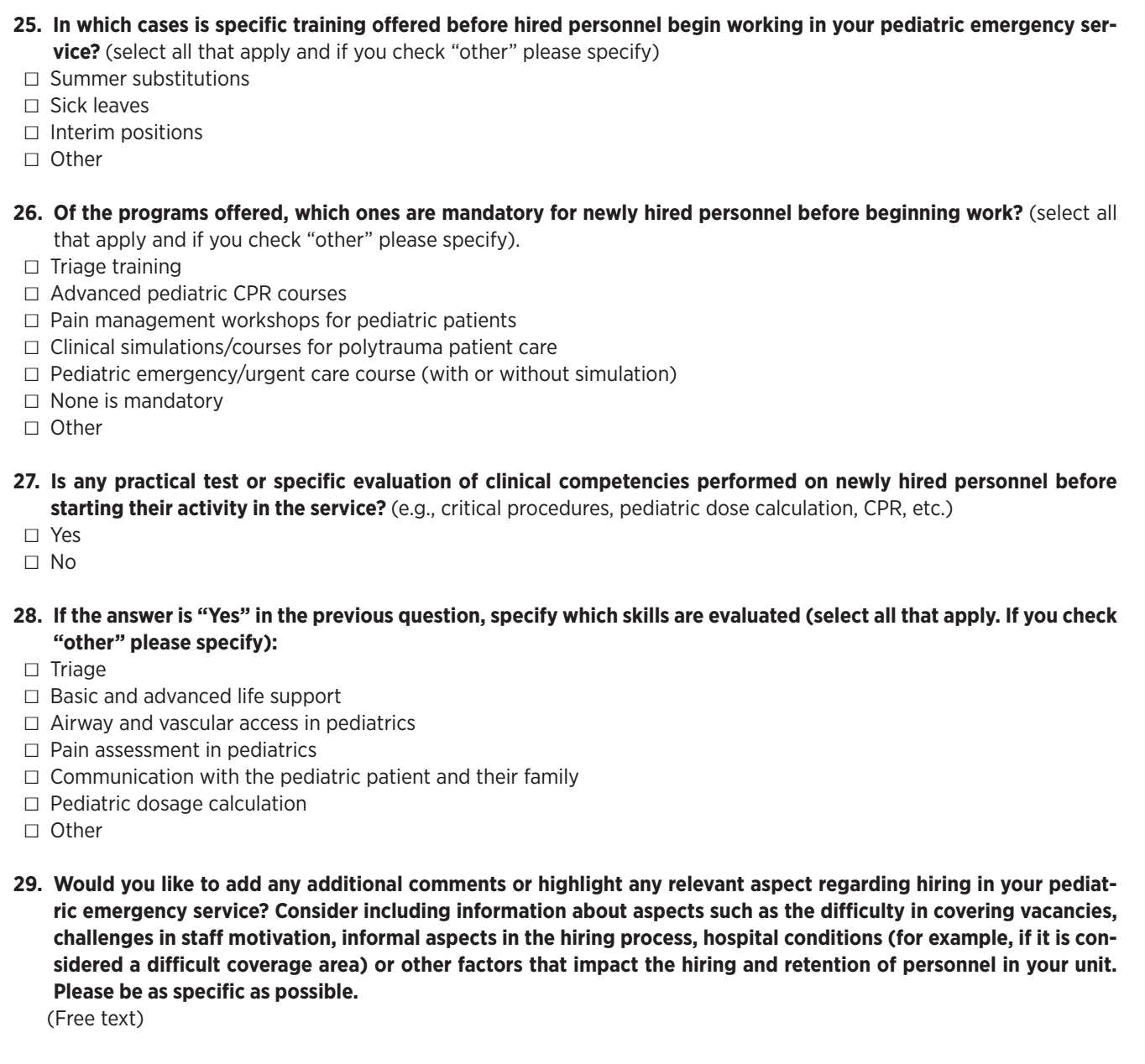
To carry it out, an ad hoc electronic questionnaire (Google Forms) was created. The content of the questionnaire was previously reviewed by members of the SEUP Care Working Group with clinical and organizational experience in PEDs to assess the relevance, clarity, and comprehensibility of the questions in a previous phase. Likewise, the questionnaire underwent a pilot review by professionals with experience in pediatric emergencies before its final dissemination to detect possible problems with comprehension, ambiguity, or relevance of the questions (Appendix 1). The questionnaire was structured into thematic blocks that collected information on:
- General center data: autonomous community, level of complexity, type of management, annual volume of pediatric emergencies, type of service (monographic or mixed).
- Hiring responsibility: who makes the decisions, whether there is a specific pool for pediatric emergencies, and whether nursing supervision teams or only human resources participate.
- Criteria valued in the hiring process: whether the specialty in pediatric nursing is required, whether previous training in pediatrics or emergencies is valued, and whether any specific accreditation is required.
- Training and experience of hired personnel: specialty in pediatric nursing, previous training in pediatrics or emergencies, and work experience in pediatrics or emergency services.
- Variations in hiring criteria based on the type of contract (substitution, temporary leave, interim, etc.) and reasons for those variations.
- Initial training is offered to newly incorporated personnel: whether training is offered before starting clinical activity, contents included, whether it is mandatory or voluntary, whether a practical assessment of skills is performed, and whether specific competencies are identified. A free-text field was also included to collect additional comments on initial training.
Qualitative variables were analyzed using absolute frequencies and percentages. Associations between categorical variables were evaluated using Fisher’s exact test for 2×2 contingency tables. In situations with expected frequencies less than 5, Monte Carlo simulations were used to estimate statistical significance. The level of significance considered was p < 0.05. Statistical analysis was performed using the JASP program (JASP Team, University of Amsterdam, Netherlands), version 0.95.1.0.
Results
General characteristics of participating centers
Hospitals from different autonomous communities and complexity levels participated, including secondary and tertiary centers with different care volumes.
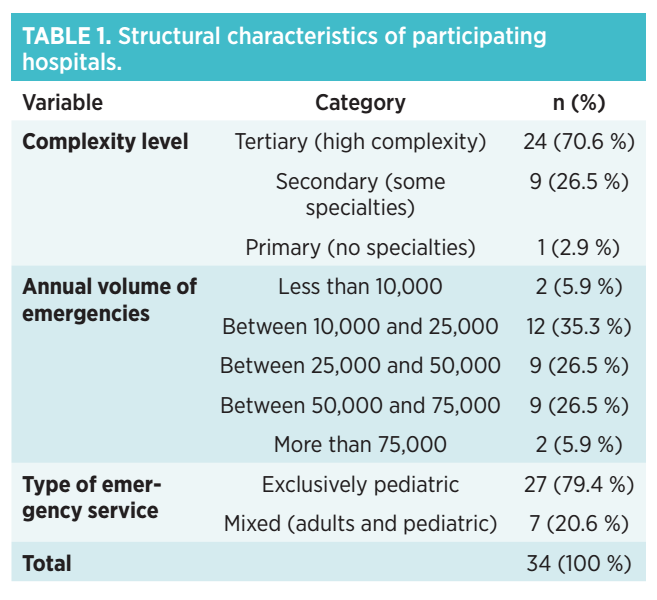
The majority of the surveyed centers were of high complexity, handled a medium volume of annual emergencies, and had exclusively pediatric services (Table 1).
Recruitment managers in the surveyed centers
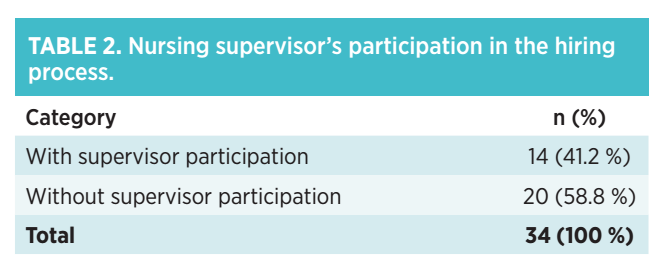
In the results, centers are grouped according to the participation of the nursing supervisor in hiring: with participation (joint or exclusive decisions of the supervisor) and without participation (exclusive hiring by Human Resources, pools, or other administrative units) (Table 2). This grouping allows for a comparison of how clinical supervision influences the selection and training criteria of nurses joining pediatric emergency services.
Training and experience requirements to work in the participating peds
The training and experience requirements demanded by hospitals to work in pediatric emergency services were analyzed, focusing on three aspects:
- Possession of the pediatric nursing specialist title.
- Specific training and experience in pediatrics.
- Specific training and experience in emergencies (general, not necessarily pediatric).
The results showed that no hospital required any of these conditions as mandatory for the incorporation of new nurses.
Training requirements
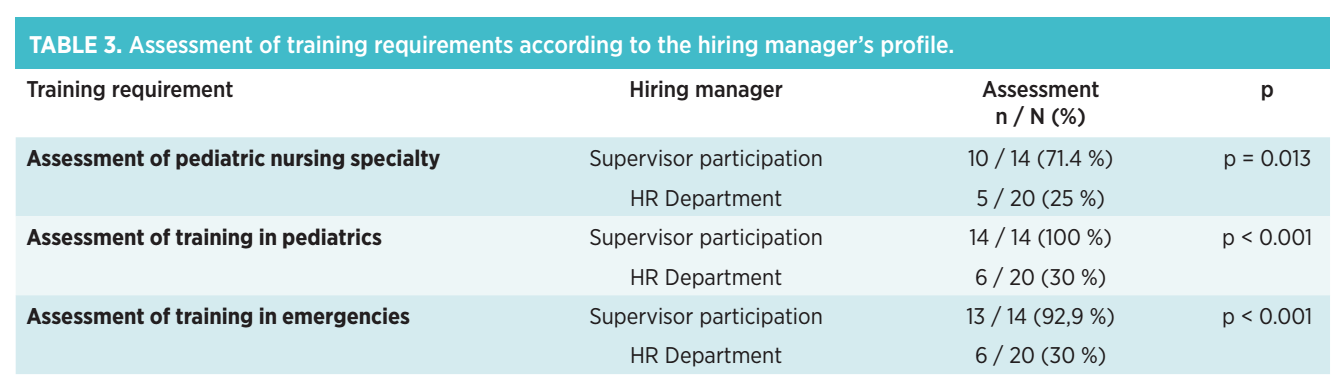
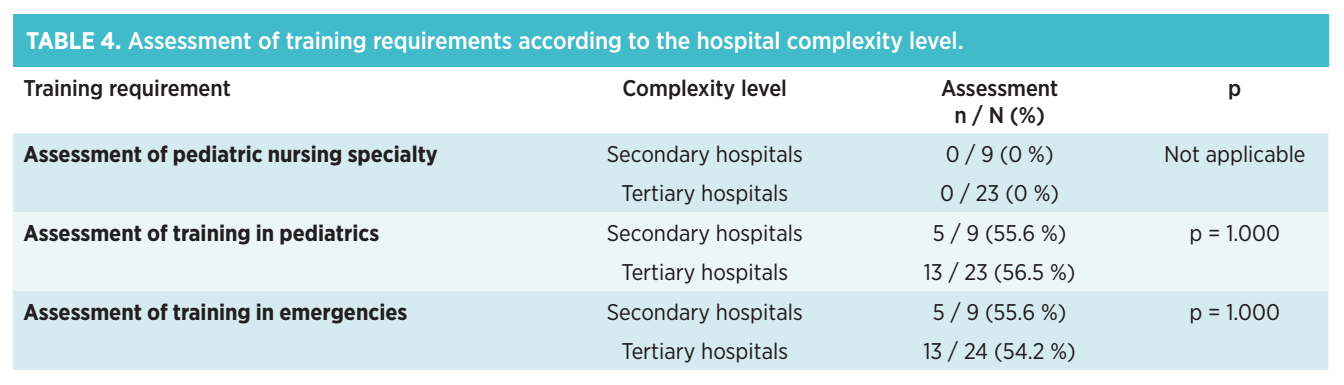
It was studied whether training in pediatrics and emergencies was taken into account based on the participation of the nursing supervisor in the hiring process and the level of hospital complexity (Tables 3 and 4).
Experience requirements
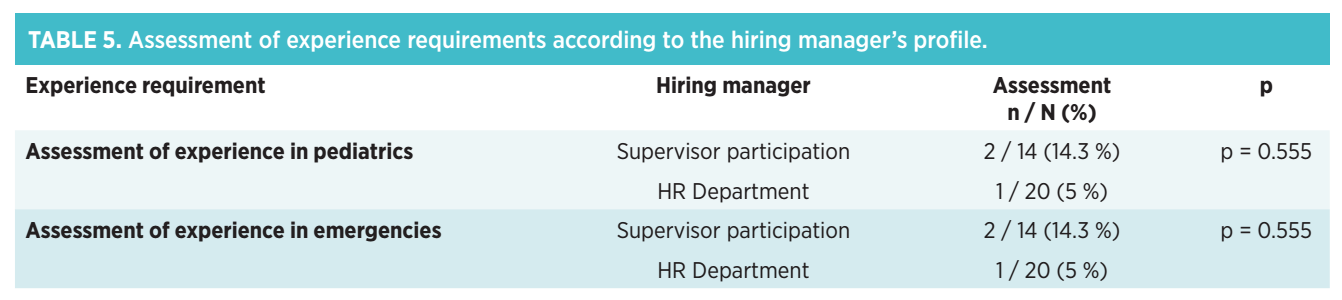
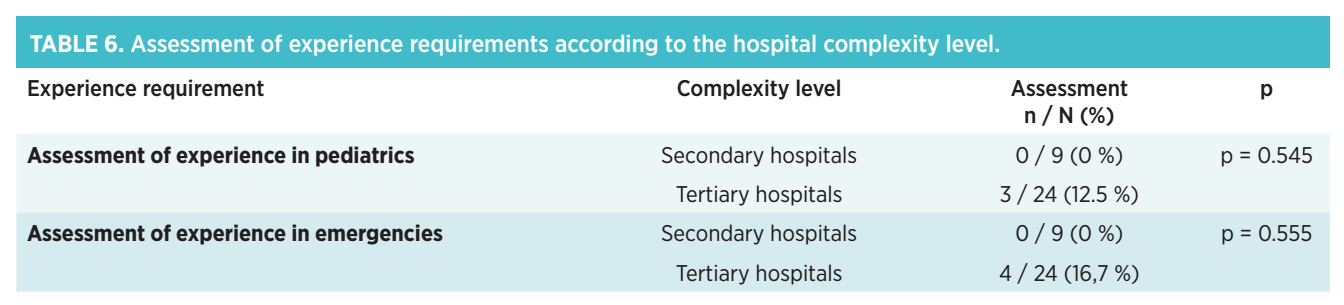
It was evaluated whether work experience requirements were taken into account based on the participation of the nursing supervisor in the hiring process and the level of hospital complexity. The results are shown in Tables 5 and 6.
Initial training offer according to hospital complexity level
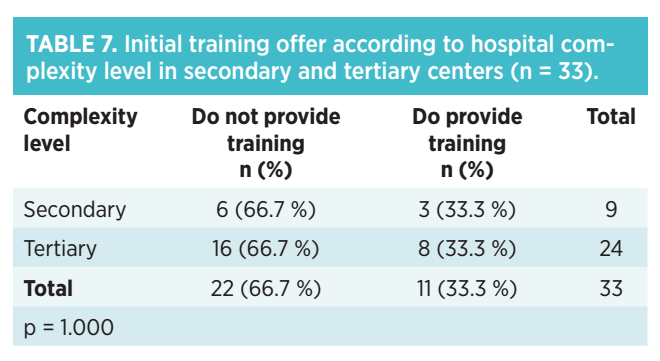
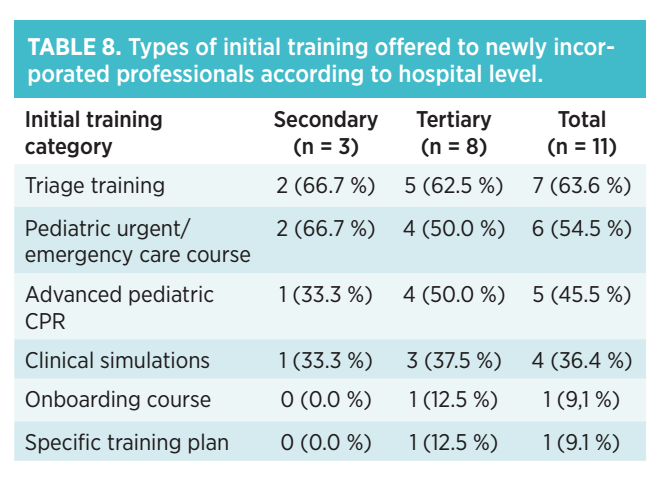
It was studied whether hospitals offered any type of initial training to professionals joining their pediatric emergency units, analyzing this offer according to the hospital complexity level. Due to structural and organizational differences, the analysis focused only on secondary and tertiary hospitals, excluding primary care centers. The results on the existence and type of initial training offered, according to the level of complexity, are detailed in Tables 7 and 8.
Reduction of hiring requirements by hospital level
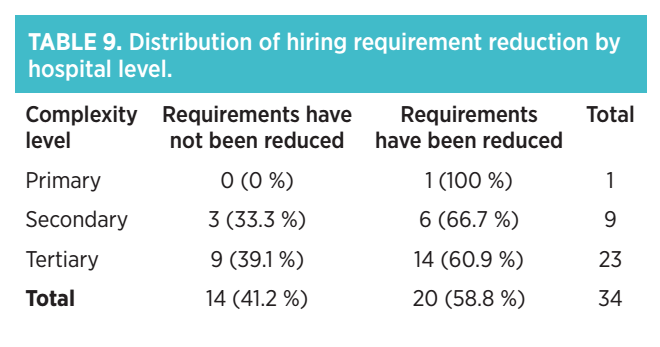
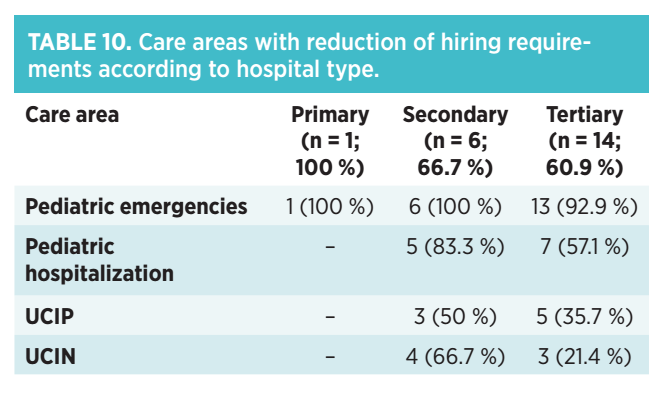
It was analyzed whether hospitals had reduced hiring requirements in recent years, differentiating according to the level of hospital complexity. The analysis focused on secondary and tertiary hospitals, excluding primary centers because they are settings with lower care complexity, where the same demand for specialization or specific training is not expected, especially in the management of severe pediatric pathology. The results on the reduction of requirements and the most affected care areas are presented in Tables 9 and 10.
Discussion
The results of this study offer a relevant and, to date, poorly documented description of the situation of participating pediatric emergency services in Spain. Although the findings show notable consistency among the included centers, they should be interpreted in the context of the participating hospitals and not as an exhaustive representation of all Spanish PEDs.
The main finding suggests a possible organizational paradox: while the clinical complexity of these services has progressively increased(3,15), administrative hiring criteria appear to be evolving in the opposite direction, as already noted by Remick et al. in the framework of Pediatric Readiness(4). The results suggest a possible discrepancy between international pediatric readiness recommendations(1,14) and the reality of employment pools in our environment, where no hospital in the sample required the specialty in pediatric nursing, specific training, or previous experience in pediatrics or emergencies as an essential requirement for joining the service. This deficiency is especially relevant considering that available evidence consistently links a higher level of pediatric readiness with a significant reduction in infant mortality(13).
The false equivalence between the adult and pediatric patient
The finding that training or experience is not required suggests that an underestimation of the clinical particularities of the pediatric patient may still persist(16). However, the identification of clinical deterioration in pediatrics is extremely dependent on the observer’s expertise(6,8). A professional without prior pediatric background may interpret a subtly altered neurobehavior or a compensatory tachycardia in an infant as “normal,” overlooking imminent deterioration(6,16).
In pediatric emergencies, clinical experience facilitates the adequate interpretation of early signs of deterioration, including those observed in the Pediatric Assessment Triangle (PAT)(6).
Triage: initial training versus professional standards
Our data indicate that many centers include triage courses as part of their initial training to compensate for the lack of experience of newly incorporated staff. However, this approach conflicts with the “Essential Requirements for Pediatric Triage” established by SEUP and SEMES(6,11). Both societies establish that triage should only be performed by professionals who have at least one year of previous clinical experience and advanced training in pediatrics. Imparting triage algorithms to novice professionals without a solid pathophysiological foundation might not be sufficient to reduce risks by generating a false sense of institutional security, increasing the risk of undertriage in patients with limited physiological reserve.
Increasing complexity and scarcity management
It is relevant to consider that PEDs currently attend to patients with high clinical complexity and vulnerability. The management of children with complex chronic or technology-dependent pathologies(3), along with the generalization of sedation and analgesia outside the operating room and the use of high-flow oxygen therapy(2), demands highly qualified nursing staff. That a majority of centers have recently reduced their requirements could reflect an organizational adaptation to the structural shortage of specialist nurses (EIR) in Spain(7). Nonetheless, these findings support the need to evaluate strategies that allow prioritizing profiles with specific experience and competencies. If the system cannot guarantee 100% specialists, it would be necessary to advance towards specific hiring models that prioritize accredited clinical experience. The current model of general pools may make it difficult for specific experience to be prioritized in the assignment of professionals, while PEDs are forced into constant initial training of staff without experience, overloading veteran personnel who must assume a dual care and teaching role(7).
The value of clinical leadership in selection
Our results show that there is a clear association between the participation of the nursing manager in the selection process and a greater valuation of the pediatric specialty. This finding underlines that internal clinical criteria recognize and prioritize the need for experts(1), although these clinical criteria may be conditioned by centralized hiring systems based exclusively on seniority points(7). Current administrative management may limit the capacity of PEDs to select professionals with specific experience and to prioritize profiles with the necessary competencies for an environment where precision in dosage and speed of response are critical.
The risk of unevaluated “onboarding”
Finally, it is relevant to point out that the offer of initial training is limited and that no center performs a practical evaluation of competencies (such as simulation or objective clinical stations) before granting complete autonomy(8). In an environment where medication errors are significantly more frequent in children than in adults, mainly due to failures in dose calculation by weight and drugs dilution(9), handing over the responsibility for stabilization to a professional without an objective evaluation of their skills could represent a priority area for organizational improvement(4).
Strengths and limitations
This study is descriptive in nature and is based on non-probabilistic sampling; therefore, the results describe the reality of the 34 participating PEDs, without direct inference to the national total. Furthermore, some comparisons included low frequencies, so inferential analyses should be interpreted cautiously and considered fundamentally exploratory. Nevertheless, the consistency of the findings in key indicators that suggest a possible discrepancy with international pediatric readiness recommendations (AAP/ENA/SEUP/WHO): 0 % specialty requirement, 100 % no prior experience required, 0 % practical evaluation; and their uniformity in high-complexity centers provide clinical relevance to the main message. To broaden representativeness, sensitivity analyses (stratification by autonomous community, weighting by care volume) and studies with larger samples would be useful. Even so, the findings show a consistent and clinically relevant trend.
Faced with this reality, these findings support the need to advance towards competency-based hiring models. We propose the following measures:
- Job profiling: institutionalize specific employment pools where specialization or previous pediatric experience are heavy requirements.
- Mandatory and evaluated onboarding: the results support the suitability of incorporating objective evaluation mechanisms for critical competencies, such as pediatric triage or CPR, before autonomous practice in a PED.
- Clinical leadership: guarantee the intervention of PED managers in selection to ensure a safety balance in the teams.
- Complementarily, the designation of a nursing reference(1,4,17) person and the performance of periodic audits of incidents related to experience and training could sustain continuous improvement(1,4,5).
In conclusion, the results of this study highlight a possible discrepancy between international pediatric readiness recommendations and the hiring criteria currently applied in the participating PEDs. Specialization and specific training in pediatric emergencies constitute relevant elements to guarantee safe care for patients with high clinical vulnerability and risk of rapid deterioration. Avanzar hacia modelos de contratación y acogida basados en competencias podría contribuir a reforzar la seguridad y la calidad asistencial en estos entornos.
Funding
No funding was received for the research, authorship, and/or publication of this article.
Author contribution
Gloria Guerrero-Márquez, Marta de-la-Hera-Merino, María-Visitación Ríos-Peromingo, María-Concepción Míguez-Navarro, Verónica González-del-Cerro: Conceptualization, Methodology, Writing - original draft.
Gloria Guerrero-Márquez, Marta de-la-Hera-Merino, María-Visitación Ríos-Peromingo, María-Concepción Míguez-Navarro, Verónica González-del-Cerro, Noelia Cotorruelo-da-Costa, Beatriz Riera-Hevia, María-Isabel Muñoz-Bernal, Noelia García-Prieto, Natalia León-Abio, Vanesa Utrero-Marín, Pablo Buck-Sainz-Rozas and Ana Martínez-Serrano: Data curation*, Formal analysis, Visualization.
Gloria Guerrero-Márquez, Marta de-la-Hera-Merino, María-Concepción Míguez-Navarro: Supervision, Project administration, Funding acquisition.
All authors critically reviewed the manuscript, approved the final version, and take responsibility for its content.
Conflicts of interest
The author declare that there are no commercial or financial conflicts of interest for this research.
Data availability
The dataset supporting the results of this study is available upon reasonable request to the corresponding author.
Use of artificial intelligence tools
ChatGPT (OpenAI) was used as a support tool for scientific writing and style review.
References
- Lim RK, Cheema B, Cartman C, Davies F, Gausche-Hill M, Hay F. Standards of care for children in emergency departments: Executive summary. Vol. 22, Canadian Journal of Emergency Medicine. 2020. 280-284 p.
- Prego Petit J. Oxigenoterapia por cánulas nasales de alto flujo. Emergencias Pediátricas [Internet]. 2023;2(1):27-32. Available from: https://seup.org/wp-content/uploads/2023/06/EP2023-21-27_32.pdf
- Lysak D, Ali S, Neufeld S, Scott S. Children with medical complexity in the emergency department: Parent experiences and information needs. Int Emerg Nurs [Internet]. 2024;77(June):101532. Available from: https://doi.org/10.1016/j.ienj.2024.101532
- Remick K, Gausche-Hill M, Joseph MM, Brown K, Snow SK, Wright JL, et al. Pediatric Readiness in the Emergency Department. J Emerg Nurs. 2019;45(1):e3-18.
- American Academy of Pediatrics C on PEM, American College of Emergency Physicians PC, Emergency Nurses Association PC. Joint policy statement-Guidelines for care of children in the Emergency Department. J Emerg Nurs [Internet]. 2013;39(2):116-31. Available from: http://dx.doi.org/10.1016/j.jen.2013.01.003
- Grupo de trabajo de Triaje SEUP. Requisitos Imprescindibles De Un Triaje Pediatrico [Internet]. 2023 [citado 26 de septiembre de 2025]. Available from: https://seup.org/wp-content/uploads/2024/01/REQUISITOS-MINIMO-TRIAJE-oct23.pdf
- Galbany-Estragués P, Millán-Martínez P. Shortage of nurses in Spain: from the global case to particular situation. SESPAS Report 2024. Gac Sanit [Internet]. 2024;38(2024):102376. Available from: https://doi.org/10.1016/j.gaceta.2024.102376
- Tao Y, Li W, Zhang L, Zhan S, Wang M, Feng M. A multicentre cross-sectional survey of the core competence of paediatric emergency nurses. Front Pediatr. 2025;13(July):1-9.
- Kaushal R, Bates DW, Landrigan C, McKenna KJ, Clapp MD, Federico F, et al. Medication errors and adverse drug events in pediatric inpatients. Jama. 2001;285(16):2114-20.
- Pham JC, Story JL, Hicks RW, Shore AD, Morlock LL, Cheung DS, et al. National study on the frequency, types, causes, and consequences of voluntarily reported Emergency Department medication errors. J Emerg Med [Internet]. 2011;40(5):485-92. Available from: http://dx.doi.org/10.1016/j.jemermed.2008.02.059
- Sociedad Española de Medicina de Urgencias y Emergencias (SEMES). Recomendaciones sobre el triaje en los Servicios de Urgencias Hospitalarios (SUH) [Internet]. Madrid: SEMES; 2025 [citado 16 Jun 2026]. Disponible en: https://www.semes.org/wp-content/uploads/2025/09/RECOMENDACIONES-SOBRE-EL-TRIAJE-EN-LOS-SUH.pdf
- Grupo de Trabajo Código Ictus Pediátrico. Ictus pediatrico [Internet]. Madrid; 2019. Available from: https://www.comunidad.madrid/servicios/salud/codigo-ictus
- Newgard CD, Lin A, Goldhaber-Fiebert JD, Remick KE, Gausche- Hill M, Burd RS, et al. State and National Estimates of the Cost of Emergency Department Pediatric Readiness and Lives Saved. JAMA Netw Open. 2024;7(11):e2442154.
- Intercollegiate Committee for Standards for Children and Young People in Emergency Care Settings. Facing the Future: Standards for children in emergency care settings [Internet]. London; 2018. Available from: https://www.rcpch.ac.uk/resources/facing-future-standards-paediatric-care
- Villanueva Álvaro C, Sevilla Hermoso P, Trenchs Sainz de la Maza V, Luaces Cubells C, Curcoy Barcenilla A. Consultas neonatales en un Servicio de Urgencias Pediátricas de un hospital terciario. Cambios en los últimos 20 años. Emergencias pediátricas [Internet]. 2025;4(1):57-9. Available from: https://seup.org/wp-content/uploads/2025/02/EP2025_41_57_59_ ESP.pdf
- Završnik J, Stiris T, Schrier L, Russell RR, del Torso S, Valiulis A, et al. Basic training requirements for health care professionals who care for children. Eur J Pediatr. 2018;177(9):1413-7.
- Brown KM, Ackerman AD, Ruttan TK, Snow SK. Access to optimal emergency care for children. Pediatrics. 2021;147(5):2018-9.

Explorar
Artículos
Volúmenes
Sobre la revista
Más leídos
Recomendaciones para el manejo de la sepsis pediátrica: actualización 2025
Emergencias Pediátricas
Falsa hematuria por pitaya: la tranquilidad del diagnóstico ante el aumento de casos de beeturia en Urgencias Pediátricas
Emergencias Pediátricas
Inhalación de vapores de lejía, una entidad poco frecuente en Pediatría
Emergencias Pediátricas
Evaluación del manejo de la gastroenteritis y la bronquiolitis en urgencias: Recomendaciones qué no hacer e indicadores de calidad
Emergencias Pediátricas
False hematuria due to pitaya: diagnostic reassurance amidst the increase of beeturia cases in pediatric emergencies
Emergencias Pediátricas