Carta al editor
Vol. 4 Núm. 3 (English)
3 min
The blackout: a great strategic opportunity for improvement
El apagón: gran oportunidad estratégica de mejora
Rocío Rodrigo-García*
Hospital Universitario Vall d’Hebron, Barcelona, Spain
Correspondencia:
Recepción:
01/10/2025
Aceptación:
08/10/2025
Publicación:
16/12/2025
Métricas
57
Visualizaciones
7
Descargas
Compartir
Compartir
On Monday, April 28, a widespread power outage (“blackout”) occurred across the entire peninsular territory, affecting nearly 50 million people and creating an unprecedented situation in our country.
The frequency of similar events—considered disasters (“an unfortunate event that severely disrupts the normal order of things,” according to the Royal Spanish Academy)—has increased in recent times, highlighting the need for effective planning strategies in emergency services. An adequate response is crucial to mitigate their impact(1,2).
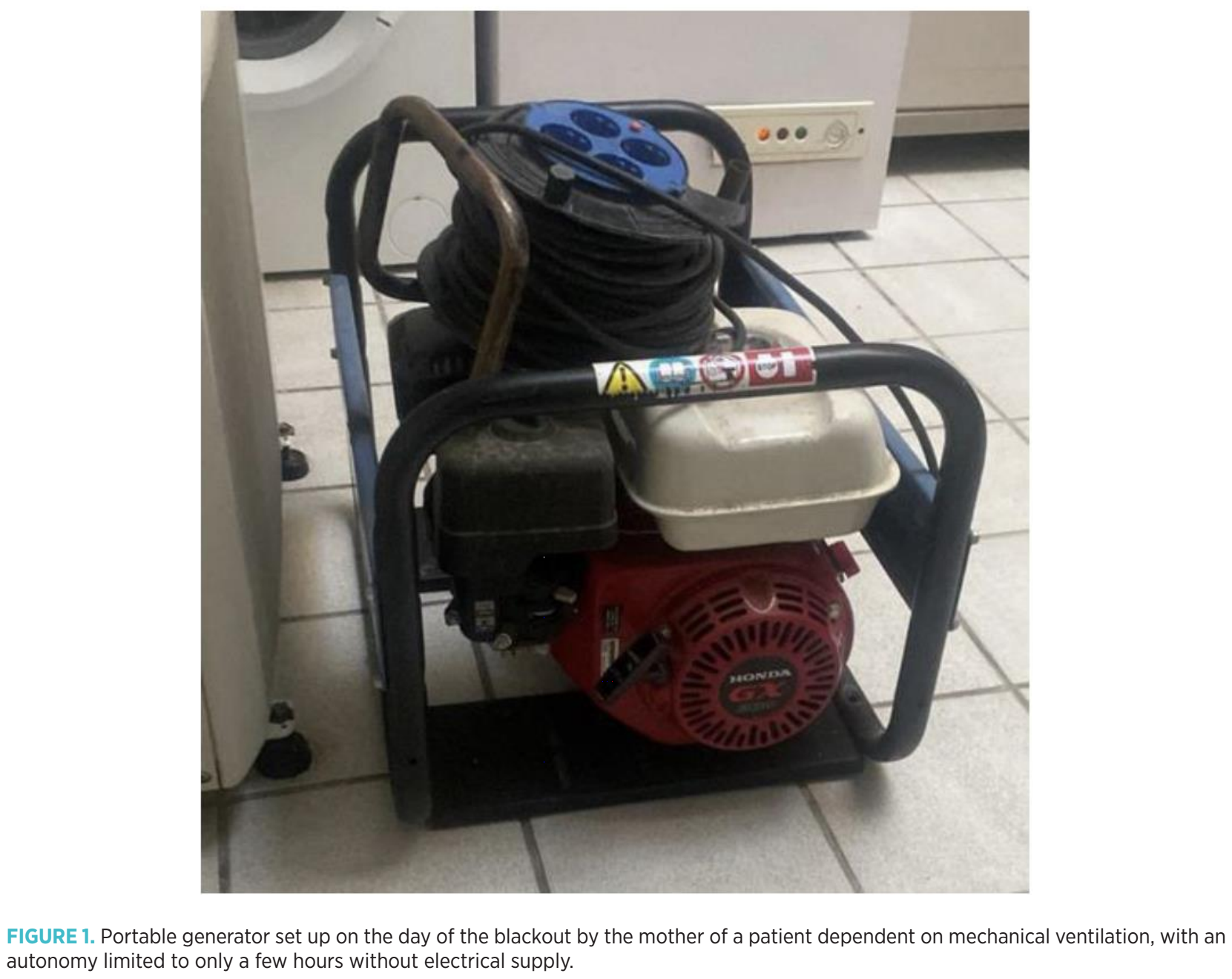
Electricity is a critical resource in hospitals. All medical devices, diagnostic equipment, communications, lighting, climate control, elevators, and information systems cease to function when the power grid fails(3). Although generators automatically activate in the event of an outage to ensure continuity of emergency care, a prolonged electrical failure can compromise the function of medical equipment, including essential devices on which the survival of some patients depends (Figure 1). For this reason, the proven vulnerability of the energy infrastructure—and the possibility of power disruptions—makes its proper management an essential component of disaster plans(3).
The literature suggests that the level of disaster preparedness is largely determined by available human resources(1). Although the World Health Organization’s Hospital Safety Index (HSI) provides a standardized and internationally accepted checklist to evaluate hospital readiness, no comprehensive or legally regulated tool exists to formally assess hospital preparedness for disasters(1).
From the Disaster Working Group of the Spanish Society of Pediatric Emergency Care (SEUP), we believe that the experience of Pediatric Emergency Departments (PEDs) during the blackout—through the detection of shortcomings in their disaster plans—represents an important opportunity to assess their preparedness. Reviewing plans and managing both material and human resources may reveal potential areas for improvement, and strengthening these aspects can lead to a more effective response during catastrophic events(4).
We encourage PEDs to use this experience to implement new plans and/or review existing ones, paying special attention to the various challenges they faced on the day of the blackout: contingency plans, alternative communication systems when regular phone networks fail, alternatives for internal patient transport when elevators stop working, staff mobilization, and more. In reviewing disaster plans, the publication “Actuación ante un desastre. Guía de elaboración de un Plan de Catástrofes externas para los Servicios de Urgencias Pediátricas” (available at https://seup.org/pdf_public/gt/Catastrofe_2.pdf), developed by the SEUP Disaster Working Group, may serve as a useful tool.
The blackout of April 28 demonstrated the fragility and dependence of our infrastructures, even in highly prepared environments such as PEDs. Therefore, we must use this experience to revise plans and strengthen the physical resources needed to successfully face future disaster scenarios.
References
- Parra Cotanda C, Rodrigo García R. Impact of a guide for developing an external disaster plan in pediatric emergency departments. An Pediatr (Barc). 2020;92(6):367–8. Available from: https://doi.org/10.1016/j.anpedi.2019.09.004
- Murphy JP, Bergström C, Gyllencruetz L. Rural hospital incident command leaders’ perceptions of disaster preparedness. BMC Emerg Med. 2025;25:12. Available from: https://doi.org/10.1186/s12873-025-01201-3
- Munasinghe NL, O’Reilly G, Cameron P. Establishing the domains of a hospital disaster preparedness evaluation tool: a systematic review. Prehosp Disaster Med. 2022;37(5):674–86. Available from: https://doi.org/10.1017/S1049023X22001212
- Beyramijam M, Farrokhi M, Ebadi A, Masoumi G, Khankeh HR. Disaster preparedness in emergency medical service agencies: a systematic review. J Educ Health Promot. 2021;10:1280. Available from: https://doi.org/10.4103/jehp.jehp_1280_20
Explorar
Artículos
Volúmenes
Sobre la revista
Más leídos
Emergencias Pediátricas
Emergencias Pediátricas
Emergencias Pediátricas
1º Congreso Mundial de Emergencias Pediátricas
Emergencias Pediátricas
Una nueva mirada a la vía aérea pediátrica: secuencia de intubación diferida como alternativa segura en situaciones de urgencias
Emergencias Pediátricas