Artículo de revisión
Vol. 5 Núm. 1 (English)
21 min
Recommendations for the management of pediatric sepsis: updated 2025
Recomendaciones para el manejo de la sepsis pediátrica: actualización 2025
Luis Hernán Llano López1*, Ana Fustiñana2, Roberto Jabornisky3, Gustavo Ariel González4,5, Josefina Pérez6,7, Guillermo Kohn-Loncarica2
1“Dr. Humberto Notti” Pediatric Hospital, Guaymallén, Mendoza, Argentina. 2“Prof. Dr. Juan P. Garrahan” Pediatric Hospital, Buenos Aires, Argentina. 3“Juan Pablo II” Pediatric Hospital, Corrientes, Argentina. 4Churruca-Visca Medical Complex, Argentine Federal Police, Buenos Aires, Argentina. 5“Dr. Ricardo Gutiérrez” Children’s Hospital, Buenos Aires, Argentina. 6Garay Sanatorium, Santa Fe, Argentina. 7“Dr. Orlando Alassia” Children’s Hospital, Santa Fe, Argentina
Correspondencia:
Recepción:
18/09/2025
Aceptación:
31/10/2025
Publicación:
11/03/2026
Métricas
263
Visualizaciones
76
Descargas
Compartir
Compartir
Resumen (ES)
La sepsis es una entidad potencialmente mortal caracterizada por disfunción orgánica secundaria a una respuesta inmune desregulada frente a la infección. La mortalidad por sepsis pediátrica es mayor en países de bajos y medianos ingresos que en los de altos ingresos.
La detección precoz es fundamental para iniciar tratamiento oportuno; sin embargo, la ausencia de criterios uniformes ha sido una de las principales barreras para un abordaje eficiente. El manejo desde el triaje resulta clave para identificar a los pacientes gravemente enfermos y prevenir complicaciones. Detectar de manera temprana la sepsis permite iniciar un tratamiento dentro de la ventana crítica, mejorando la sobrevida infantil.
En 2024 se publicaron los nuevos criterios pediátricos, la Escala de Sepsis Phoenix (ESP), que operacionaliza la definición de sepsis en niños y aporta parámetros diagnósticos específicos. Su implementación plantea interrogantes: ¿podría utilizarse para pesquisa temprana o como disparador de acciones iniciales?
Este trabajo aborda el concepto y definición de sepsis, aspectos epidemiológicos, paradigmas actuales y diagnóstico precoz de la sepsis y el choque séptico pediátrico.
Palabras clave (ES):
Resumen (EN)
Sepsis is a life-threatening condition characterized by organ dysfunction secondary to a dysregulated immune response to infection. Mortality from pediatric sepsis is higher in low- and middle-income countries than in high-income countries.
Early detection is crucial for initiating timely treatment; however, the lack of uniform criteria has been a major barrier to efficient management. Management at the triage level is key to identifying critically ill patients and preventing complications. Early detection of sepsis allows for the initiation of treatment within the critical window, thereby improving child survival.
In 2024, new pediatric criteria were published: the Phoenix Sepsis Score, which operationalizes the definition of sepsis in children and provides specific diagnostic parameters. Its implementation raises questions: could it be used for early screening or as a trigger for initial actions?
This paper addresses the concept and definition of sepsis, epidemiological aspects, current paradigms, and the early diagnosis of pediatric sepsis and septic shock.
Palabras clave (EN):
Introduction
Sepsis is a potentially fatal, heterogeneous clinical entity characterized by organ dysfunction caused by an inadequately regulated immune system response to infection(1). The World Health Assembly identified it as a key health priority due to its contribution to global morbidity and mortality(2). Eleven million people die annually from sepsis, representing 20% of global deaths. 26.4% of sepsis deaths (2.9 million) occur in children under five years of age(3).
Pediatric sepsis mortality is higher in low- and middle-income countries compared to high-income countries (31.7% vs. 19.3%)(4). Furthermore, there are deep inequities between regions within the same country and even within the same city(5,6). Contributing factors include greater poverty, lack of vaccination, low investment in health, lack of drinking water and sewage systems, long distances to access healthcare, impassable roads, geographical variations, inadequate and delayed ambulance transport, lack of supplies, and unqualified personnel for care. These factors negatively influence the prevalence, evolution, detection, and management of this entity(7).
In Argentina, actions have been developed in the management of sepsis(8–10), which contributed to decreasing the mortality of the entity from 31.8% in 2008(11) to 16% in 2021 and 13.5% in 2022(12).
The purpose of this narrative review is to update the new diagnostic criteria for sepsis in children and the available tools for its timely recognition.
Epidemiology in Latin America and Argentina
In pediatric intensive care units (PICUs) in Brazil, de Souza et al. observed 74.5 cases of sepsis per 100,000 children(13). Reports including PICUs from various countries indicate prevalence rates in Latin America ranging between 16.3%(14) and 48.6%(15), with wide variations such as 27.3% in Colombia(16); 25% in Brazil(13) and 13.8% in Argentina(11).
Hospital mortality from sepsis is also variable, ranging between 11% and 56.1%(13–17). Factors associated with mortality include coming from rural areas, higher severity scores, suffering from shock or acute respiratory distress syndrome (ARDS), receiving a greater quantity of fluids during resuscitation(11), lack of adherence to clinical practice guidelines, higher maternal illiteracy, admission to the PICU directly from the emergency room, greater presence of complex chronic conditions, and a higher number of immunodeficiencies(13).
Socioeconomic conditions influence sepsis indicators(18). In Argentina, as in other regions of Latin America, there is a higher prevalence in regions with worse socioeconomic indicators (higher infant mortality, higher percentage of poverty, higher percentage of illiteracy, worse monetary income, worse educational indices, worse human development indices)(5,6,16,19).
Approach to sepsis through individualized and contextualized measure bundles
Various clinical practice guidelines for the management of sepsis in children have been proposed by recognized scientific societies in the last decade(20–23); however, they do not always reflect the reality of all contexts. The Pan American Health Organization proposes considering the social and organizational setting where they are applied, transforming them into institutional practice guidelines(24). It is necessary to apply a contextual approach paradigm, as there is not “one sepsis, but several,” depending on the context, the characteristics of the host, and the causal germ.
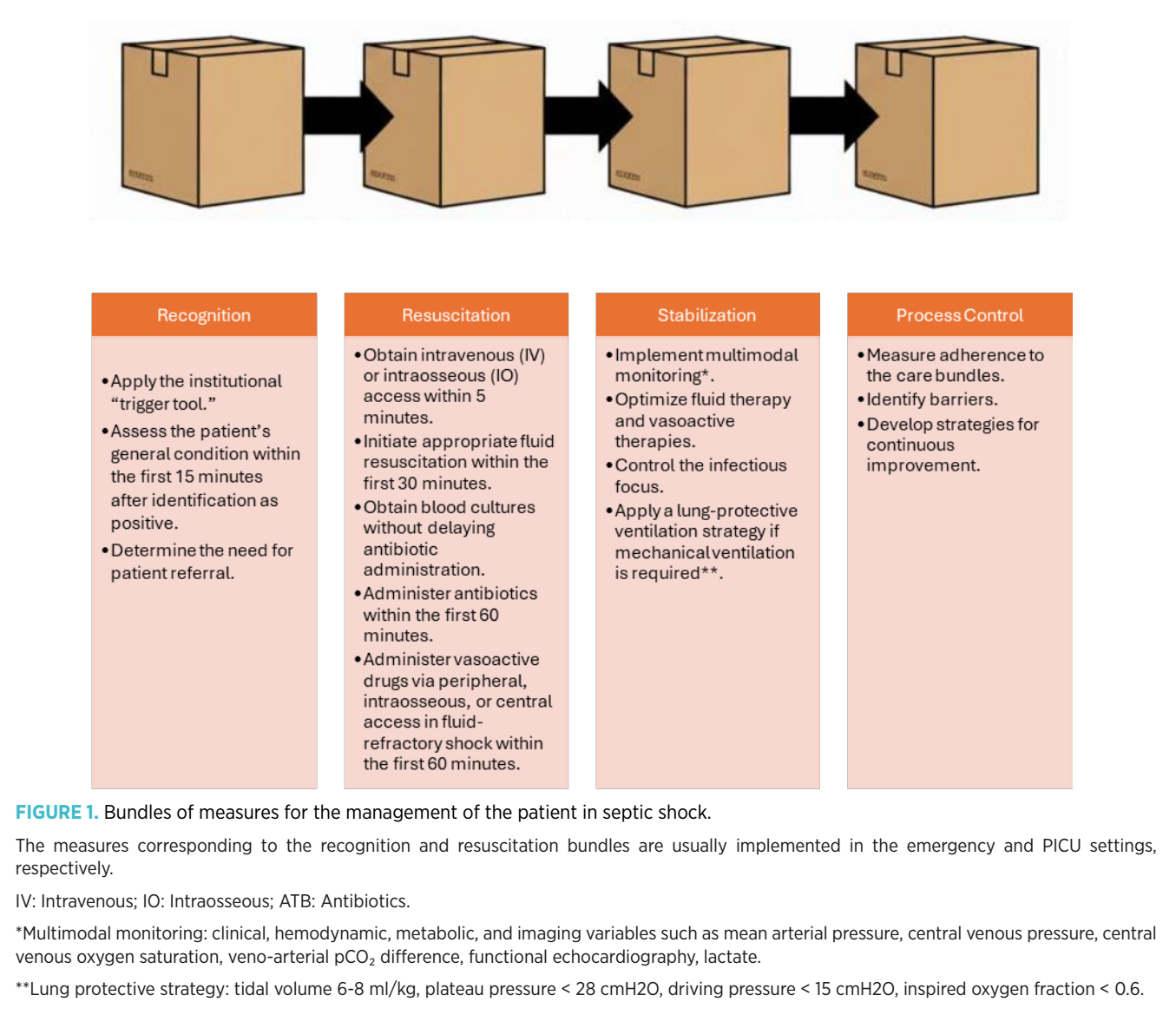
These recommendations can be grouped into the so-called “measure bundles”(21), which include recognition, resuscitation, stabilization, and process control. (Figure 1) We will now develop the recognition bundle.
Recognition bundle
The early detection of sepsis is crucial for initiating timely treatment. The lack of adequate criteria for its recognition constitutes the greatest barrier to an efficient approach(25). Historically, the term “sepsis” has identified patients with high-risk infections, but validated measures still do not exist to differentiate a “common infection” from “sepsis.” The first pediatric criteria used “systemic inflammatory response syndrome,” which was highly sensitive but lacked specificity. To improve specificity, associated organ failure was added(26). However, these criteria were of little utility outside of the intensive care setting(27).
In 2016, the definition of “life-threatening organ dysfunction caused by a dysregulated host response to infection” emerged(1). It became necessary to distinguish between this “theoretical” definition and how to make it clinically “operational.” An attempt was made to adapt the adult criteria to pediatrics with the pediatric Sequential Organ Failure Assessment (pSOFA) score(28,29), although these criteria were not entirely useful for the early detection of sepsis, even in pediatric emergency departments in our context(30).
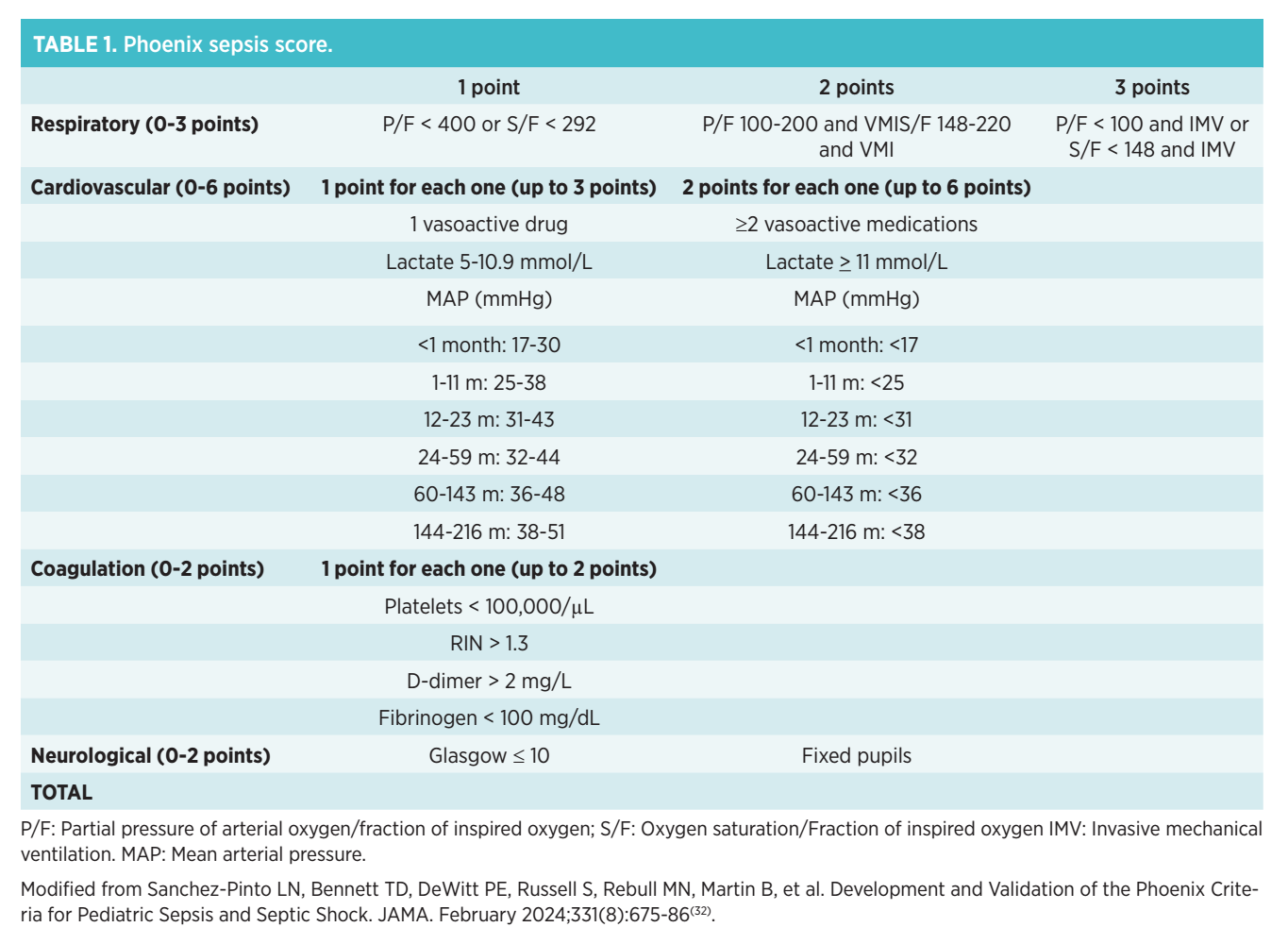
In 2024, new pediatric sepsis criteria emerged, operationalizing the 2016 definition for this group(31,32). The “Phoenix Score or Phoenix Sepsis Scale (ESP)” was developed, which allowed the definition of sepsis in pediatrics to be made operational, specifying criteria for its diagnosis (Table 1).
Operational Definitions
Sepsis: Potentially life-threatening organ dysfunction, demonstrated by an ESP score ≥ 2, considering the compromise of the following systems: respiratory, cardiovascular, coagulation, and/or neurological, in the context of a confirmed or suspected infection.
Septic Shock: Sepsis (ESP ≥ 2) with at least 1 point in the cardiovascular category (Table 1).
These new definitions achieved by operational criteria invite us to reflect:
Are they useful for the early recognition of sepsis in the emergency department?
The answer is no. The score is used for the definitive diagnosis of the entity (sepsis and septic shock), a situation that usually occurs later, after the initial consultation and outside the emergency departments. Therefore, it should not be used as a screening tool for early detection or identification, nor to trigger initial actions(33,34).
What are the reasons?
Sepsis is an uncontrolled systemic immune response with organ dysfunction, but there are preceding pathophysiological and hemodynamic stages, subject to multiple variables of the host, the context, and the causal germ. Initially, there is an infection and its local adaptive response. If it fails to be controlled, it evolves into a systemic adaptive response. These instances constitute “probable, potential, suspected sepsis, etc.,” which, so far, has not managed to find an operative definition through criteria and usually occurs in the out-of-hospital setting or in the emergency department.
So, what would be the adequate detection tool in the emergency department?
Early sepsis detection tools should differentiate the small number of patients who have or will develop sepsis and septic shock from many children with abnormal vital signs related to an uncomplicated infection without associated organ dysfunction. An ideal tool must have high accuracy and sensitivity, provide an alert that allows for early action, be easy to implement, have minimal interrater variability, and be seamlessly incorporated into workflows. Unfortunately, this tool does not yet exist, although work is currently underway on its development.
What resources are available for the timely detection of sepsis in the emergency department?
The association of hospital triage, institutional trigger tools, objective clinical evaluation, and complementary studies could contribute to optimizing the timely detection of sepsis.
What can be done in the hospital “triage area”?
Triage is the first contact of the health team with the child consulting the emergency department. Its objective is to classify the urgency to avoid prolonged waiting times in critically ill children. It should not take more than 3 minutes. Mostly, the Pediatric Assessment Triangle (PAT) (35–37) is used. This is composed of 3 sides: appearance, breathing, and circulation, and there is a high degree of association between an altered PAT and a critically ill child, as well as with the requirement for hospital admission(38,39).
The level of parental concern has shown some utility in the recognition of sepsis and has been related to an increased likelihood of PICU admission. The same occurs with the healthcare professional’s “feeling” that “something is not right” (gut feeling). This appreciation should be considered when suspecting sepsis(40,41).
In triage, the existence of associated comorbidities should be investigated. Jabornisky et al. reported higher mortality in children with comorbidities (OR: 2.1; 95% CI: 1.3-3.3), especially in those with oncological disease (OR: 3.6; 95% CI: 1.5-8.3)(11).
In a survey conducted in Latin America, only 61% of the centers reported having triage available(25).
What do the action trigger tools consist of?
The American College of Critical Care Medicine (ACCM) and the Surviving Sepsis Campaign (SSC) recommend that institutions develop and adapt their own screening tools. Examples include the Pediatric Observation Priority Score (POPS)(42) and the American Academy of Pediatrics’ early septic shock recognition trigger tool(43). They are based on alterations in vital signs, risk history, and some incorporate the concern of caregivers. They report variable sensitivity and specificity (86.7%-92% and 50%-87%, respectively). One difficulty is the identification of false positives, children who received early treatment and did not develop multi-organ failure. Are they false positives or children treated opportunely?
How is an objective clinical assessment performed?
Clinical parameters such as body temperature, heart and respiratory rates, capillary refill time, pulses, level of consciousness, skin appearance and color, and urine output should be evaluated and interpreted in the context of a child with suspected sepsis.
Traditionally, it is accepted that there are different presentations of septic shock in pediatrics. The most frequent pattern is one of low cardiac output and high peripheral resistance (cold or hypodynamic shock). In a smaller percentage, it presents with high cardiac output and low peripheral resistance (warm or hyperdynamic shock). Diastolic cardiac dysfunction and the inability to present compensatory tachycardia have been associated with a worse prognosis(44).
Recently, it has been proposed not to rely solely on clinical signs to classify shock as “cold” or “warm”(20) and to use advanced hemodynamic variables when available to guide resuscitation(20, 21).
Tachycardia is a frequent and early sign in sepsis, although non-specific, and may be absent in hypothermia. Sustained and unexplained tachycardia should be considered a warning sign(45). Tachypnea generally occurs without respiratory effort. Central and peripheral pulses should be palpated. They are felt as “thready” (low amplitude) in hypodynamic shock and “bounding” (wide) in hyperdynamic shock. The absence of central pulses is usually associated with arterial hypotension. Capillary refill time provides information on the state of peripheral perfusion. Several factors can influence its determination, such as age, environmental and body temperature, the technique used, the measurement site, ambient lighting, and skin color. Its normal value determined on the index finger in infants and children is 2 seconds and 4 seconds if measured on the feet and chest. In adolescents and adults, its normal value is less than 3.5 to 4.5 seconds(46). Capillary refill time is prolonged in hypodynamic shock and shortened (“flash” capillary refill) in hyperdynamic shock. A rapid “flash” capillary refill should not be interpreted as normal in a child being assessed for sepsis. An abnormal capillary refill after initial fluid resuscitation has been associated with an almost 6-fold higher mortality(47). Altered peripheral perfusion is an expression of microcirculatory dysfunction and has been related to elevated serum lactate and multiorgan failure(48). Peripheral perfusion-guided resuscitation strategies may result in lower mortality and faster resolution of organ dysfunction compared to a lactate-guided strategy(49).
In hypodynamic shock, the skin is cold, pale, mottled, reticulated, and earthy. In hyperdynamic shock, it is flushed and warm. Some authors have proposed a severity score based on the extent of skin mottling in adult patients(50).
Non-invasive arterial pressure provides information about the hemodynamic status at admission and, in case of hypotension, allows the shock to be categorized as decompensated. Hypotension is always a late sign and indicates the failure of all compensatory mechanisms. The finding of decreased systolic arterial pressure (SAP) with high diastolic arterial pressure (DAP) (narrow pulse pressure) can be found in hypodynamic shock, whereas normal SAP with decreased DAP (wide pulse pressure) is observed in hyperdynamic shock.
Which complementary studies could contribute to the diagnosis and decision-making?
It is appropriate to initially request a white blood cell count, and to determine blood glucose, calcemia, and ionogram. Procalcitonin, associated or not with C-reactive protein, is more specific and sensitive for diagnosing bacterial infection when compared to the leukocyte count and the absolute neutrophil value(23,51). Elevated initial procalcitonin values suggest worse outcomes, and serial measurements can be used for follow-up(52). Similarly, Interleukin 6 (IL-6) has been studied as an optimal marker of severe bacterial infection given its rapid elevation and early discriminatory capacity. However, the studies are highly heterogeneous and do not yet allow for a recommendation in this regard(53,54).
In recent years, ferritin has been a focus of study as a predictor of mortality, and differentiated therapeutic approaches have been proposed for patients with elevated ferritin values(55). However, its use as a biomarker in the initial evaluation cannot be recommended, as it is non-specific and not available in all settings(23).
Serum lactic acid represents a cardiovascular component of the Phoenix score. Its serial measurement can be useful for follow-up, as a guide for resuscitation, and finally, as a diagnostic criterion(23). However, it should not be used as an isolated criterion for decision-making.
Conclusion
Early detection of sepsis is essential for establishing timely treatment. Compliance with institutional protocols and the use of early detection tools could be considered measures for continuous improvement. The new criteria and definitions for pediatric sepsis contribute to properly establishing diagnoses, monitoring processes, and clinical research, although they should not be used for decision-making in emergency settings.
Funding
No funding was received for the research, authorship, and/or publication of this article.
Authors’ contributions
Luis Hernán Llano López: Investigation, Writing, Methodology, Review and editing.
Ana Fustiñana: Investigation, Data collection, Writing – review and editing.
Roberto Jabornisky: Writing, Supervision, Review and editing.
Gustavo Ariel González: Writing, Review and editing, Supervision.
Josefina Pérez: Investigation, Writing, Review and editing.
Guillermo Kohn-Loncarica: Investigation, Writing, Review and editing.
Conflicts of interest
The authors declare that there are no commercial or financial conflicts of interest for this research.
Use of artificial intelligence tools
The authors declare that no artificial intelligence tool (such as ChatGPT, Copilot, Gemini, or others) has been used in the writing, analysis, or review of this article.
References
- Singer M, Deutschman CS, Seymour CW, Shankar-Hari M, Annane D, Bauer M, et al. The third international consensus definitions for sepsis and septic shock (sepsis-3). JAMA. 2016;315(8):801-10. Available from: https://doi.org/10.1001/jama.2016.0287.
- World Health Organization. Executive board, 140th session. Improving the prevention, diagnosis and clinical management of sepsis: report by the secretariat. Geneva: WHO; 2017.
- Rudd KE, Johnson SC, Agesa KM, Shackelford KA, Tsoi D, Kievlan DR, et al. Global, regional, and national sepsis incidence and mortality, 1990–2017: analysis for the global burden of disease study. Lancet. 2020;395(10219):200-11. Available from: https://doi.org/10.1016/S0140-6736(19)32989-7.
- Tan B, Wong JJM, Sultana R, Koh JCJW, Jit M, Mok YH, et al. Global case-fatality rates in pediatric severe sepsis and septic shock: a systematic review and meta-analysis. JAMA Pediatr. 2019;173(4):352-62. Available from: https://doi.org/10.1001/jamapediatrics.2018.4839.
- Gavidia R, Fuentes SL, Vasquez R, Bonilla M, Ethier MC, Diorio C, et al. Low socioeconomic status is associated with prolonged times to assessment and treatment, sepsis and infectious death in pediatric fever in El Salvador. PloS One. 2012;7(8):e43639. Available from: https://doi.org/10.1371/journal.pone.0043639.
- Gonzalez G, Arias-Lopez M del P, Bordogna A, Palacio G, Serrate AS, Fernández AL, et al. Condiciones socioeconómicas más bajas se asocian con tasas de sepsis infantil más altas pero con resultados similares. Andes Pediatr [Internet]. 2023;94(2):187-99. Available from: https://www.revistachilenadepediatria.cl/index.php/rchped/article/view/4452.
- Souza DC, Jaramillo-Bustamante JC, Céspedes-Lesczinsky M, Quintero EMC, Jimenez HJ, Jabornisky R, et al. Challenges and health-care priorities for reducing the burden of paediatric sepsis in Latin America: a call to action. Lancet Child Adolesc Health. 2022;6(2):129-36. Available from: https://doi.org/10.1016/S2352-4642(21)00341-2.
- Jabornisky R, Mansur A. Shock. En: Programa nacional de actualización pediátrica (PRONAP) 2013. AMA Galli. Sociedad Argentina de Pediatría; p. 81-107.
- Kohn Loncarica G, Fustiñana A, Jabornisky R. Recommendations for the management of pediatric septic shock in the first hour (part one). Arch Argent Pediatr. 2019;(1):e14-23. Available from: https://doi.org/10.5546/aap.2019.eng.e14.
- Kohn Loncarica G, Fustiñana A, Jabornisky R. Recomendaciones para el manejo del shock séptico en niños durante la primera hora (segunda parte). Arch Argent Pediatr. 2019;117(1):e24-33. Available from: https://doi.org/10.5546/aap.2019.eng.e24.
- Jabornisky R, Sáenz SS, Capocasa P, Jaen R, Moreno RP, Landry L, et al. Epidemiological study of pediatric severe sepsis in Argentina. Arch Argent Pediatr. 2019;117(3):S135-56. Available from: https://doi.org/10.5546/aap.2019.eng.S135.
- Galván ME, Viqueira Guzmán C, Lanzavecchia E, Jabornisky R, Ruvinsky S, Kulik MV, et al. Second epidemiological study of pediatric sepsis and septic shock in Argentina (ESSPED-2). Arch Argent Pediatr. 2025;e202510646. Available from: https://doi.org/10.5546/aap.2025-10646.eng.
- de Souza DC, Gonçalves Martin J, Soares Lanziotti V, de Oliveira CF, Tonial C, de Carvalho WB, et al. The epidemiology of sepsis in paediatric intensive care units in Brazil (the sepsis prevalence assessment database in pediatric population, spread ped): an observational study. Lancet Child Adolesc Health. 2021;5(12):873-81. Available from: https://doi.org/10.1016/S2352-4642(21)00286-8.
- Weiss SL, Fitzgerald JC, Pappachan J, Wheeler D, Jaramillo-Bustamante JC, Salloo A, et al. Global epidemiology of pediatric severe sepsis: the sepsis prevalence, outcomes, and therapies study. Am J Respir Crit Care Med. 2015;191(10):1147-57. Available from: https://doi.org/10.1164/rccm.201412-2323OC.
- de Souza DC, Shieh HH, Barreira ER, Ventura AMC, Bousso A, Troster EJ, et al. Epidemiology of sepsis in children admitted to PICUs in South America. Pediatr Crit Care Med. 2016;17(8):727-34. Available from: https://doi.org/10.1097/PCC.0000000000000847.
- Jaramillo-Bustamante JC, Marín-Agudelo A, Fernández-Laverde M, Bareño-Silva J. Epidemiology of sepsis in pediatric intensive care units: first Colombian multicenter study. Pediatr Crit Care Med. 2012;13(5):501-8. Available from: https://doi.org/10.1097/PCC.0b013e31823c980f.
- Díaz Rubio F. Carga de enfermedad de sepsis en el lactante menor. Un gran desafío multidisciplinario para Latinoamérica. Rev Chil Pediatr. 2020;91(4):492-4. Available from: http://www.scielo.cl/scielo.php?script=sci_abstract&pid=S0370-41062020000400492&lng=es&nrm=iso&tlng=es.
- Mitchell HK, Reddy A, Montoya-Williams D, Harhay M, Fowler JC, Yehya N. Hospital outcomes for children with severe sepsis in the USA by race or ethnicity and insurance status: a population-based, retrospective cohort study. Lancet Child Adolesc Health. 2021;5(2):103-12. Available from: https://doi.org/10.1016/S2352-4642(20)30341-2.
- Mangia CMF, Kissoon N, Branchini OA, Andrade MC, Kopelman BI, Carcillo J. Bacterial sepsis in brazilian children: a trend analysis from 1992 to 2006. PLoS One. 2011;6(6):e14817. Available from: https://doi.org/10.1371/journal.pone.0014817.
- Weiss SL, Peters MJ, Alhazzani W, Agus MSD, Flori HR, Inwald DP, et al. Surviving sepsis campaign international guidelines for the management of septic shock and sepsis-associated organ dysfunction in children. Pediatr Crit Care Med. 2020;21(2):e52-106. Available from: https://doi.org/10.1097/PCC.0000000000002198.
- Davis AL, Carcillo JA, Aneja RK, Deymann AJ, Lin JC, Nguyen TC, et al. American college of critical care medicine clinical practice parameters for hemodynamic support of pediatric and neonatal septic shock. Crit Care Med. 2017;45(6):1061-93. Available from: https://doi.org/10.1097/CCM.0000000000002425.
- Suspected sepsis: recognition, diagnosis and early management [Internet]. London: National Institute for Health and Care Excellence (NICE); 2024. (National Institute for Health and Care Excellence: Guidelines). Available from: http://www.ncbi.nlm.nih.gov/books/NBK553314/.
- Fernández-Sarmiento J, De Souza DC, Martinez A, Nieto V, López-Herce J, Soares Lanziotti V, et al. Latin American consensus on the management of sepsis in children: Sociedad Latinoamericana de Cuidados Intensivos Pediátricos [Latin American Pediatric Intensive Care Society] (SLACIP) task force: Executive summary. J Intensive Care Med. 2022;37(6):753-63. Available from: https://doi.org/10.1177/08850666211054444.
- Organización Panamericana de la Salud. Directriz para el fortalecimiento de los programas nacionales de guías informadas por la evidencia. Una herramienta para la adaptación e implementación de guías en las Américas. Washington, D.C.: OPS; 2018. Available from: https://iris.paho.org/handle/10665.2/49145.
- Kohn-Loncarica GA, Fustiñana AL, Jabornisky RM, Pavlicich SV, Prego-Pettit J, Yock-Corrales A, et al. How are clinicians treating children with sepsis in emergency departments in Latin America?: an international multicenter survey. Pediatr Emerg Care. 2021;37(11):e757-63.
- Goldstein B, Giroir B, Randolph A, International Consensus Conference on Pediatric Sepsis. International pediatric sepsis consensus conference: definitions for sepsis and organ dysfunction in pediatrics. Pediatr Crit Care Med. 2005;6(1):2-8. Available from: https://doi.org/10.1097/01.PCC.0000149131.72248.E6.
- Jaramillo-Bustamante JC, Piñeres-Olave BE, González-Dambrauskas S. SIRS or not SIRS: is that the infection? A critical review of the sepsis definition criteria. Bol Med Hosp Infant Mex. 2020;77(6):293-302. Available from: https://doi.org/10.24875/BMHIM.20000202.
- Matics TJ, Sanchez-Pinto LN. Adaptation and validation of a pediatric sequential organ failure assessment score and evaluation of the sepsis-3 definitions in critically ill children. JAMA Pediatr. 2017;171(10):e172352. Available from: https://doi.org/10.1001/jamapediatrics.2017.2352.
- Schlapbach LJ, Straney L, Bellomo R, MacLaren G, Pilcher D. Prognostic accuracy of age-adapted SOFA, SIRS, PELOD-2, and qSOFA for in-hospital mortality among children with suspected infection admitted to the intensive care unit. Intensive Care Med. 2018;44(2):179-88. Available from: https://doi.org/10.1007/s00134-017-5021-8.
- Fustiñana A, Yock-Corrales A, Casson N, Galvis L, Iramain R, Lago P, et al. Shock séptico en niños: ¿son aplicables los criterios de sepsis-3 en urgencias? Un estudio multicéntrico en Latinoamérica. Emerg Pediatr. 2024;3(1):9-18. Available from: https://seup.org/wp-content/uploads/2024/05/EP2024_31_9_18_ESP.pdf.
- Schlapbach LJ, Watson RS, Sorce LR, Argent AC, Menon K, Hall MW, et al. International consensus criteria for pediatric sepsis and septic shock. JAMA. 2024;331(8):665-74. Available from: https://doi.org/10.1001/jama.2024.0179.
- Sanchez-Pinto LN, Bennett TD, DeWitt PE, Russell S, Rebull MN, Martin B, et al. Development and validation of the phoenix criteria for pediatric sepsis and septic shock. JAMA. 2024;331(8):675-86. Available from: https://doi.org/10.1001/jama.2024.0196.
- Horvat CM, Rosen JR, Carcillo J. The phoenix criteria for pediatric sepsis. Pediatr Crit Care Med. 2025;26(8):e1080. Available from: https://doi.org/10.1097/PCC.0000000000003762.
- Lanziotti VS, Ventura A, Kache S, Fernández-Sarmiento J. New phoenix criteria for pediatric sepsis and septic shock: the strengths and the future of a comprehensive perspective. Crit Care Sci. 2024;36:e20240058en. Available from: https://doi.org/10.62675/2965-2774.20240058-en.
- Gravel J, Gouin S, Goldman RD, Osmond MH, Fitzpatrick E, Boutis K, et al. The canadian triage and acuity scale for children: a prospective multicenter evaluation. Ann Emerg Med. 2012;60(1):71-77.e3. Available from: https://doi.org/10.1016/j.annemergmed.2011.12.004.
- Gravel J, Fitzpatrick E, Gouin S, Millar K, Curtis S, Joubert G, et al. Performance of the canadian triage and acuity scale for children: a multicenter database study. Ann Emerg Med. 2013;61(1):27-32.e3. Available from: https://doi.org/10.1016/j.annemergmed.2012.05.024.
- Zachariasse JM, Seiger N, Rood PPM, Alves CF, Freitas P, Smit FJ, et al. Validity of the manchester triage system in emergency care: a prospective observational study. PloS One. 2017;12(2):e0170811.Available from: https://doi.org/10.1371/journal.pone.0170811.
- Fernández A, Ares MI, Garcia S, Martinez-Indart L, Mintegi S, Benito J. The validity of the pediatric assessment triangle as the first step in the triage process in a pediatric emergency department. Pediatr Emerg Care. 2017;33(4):234-8. Available from: https://doi.org/10.1097/PEC.0000000000000717.
- Ma X, Liu Y, Du M, Ojo O, Huang L, Feng X, et al. The accuracy of the pediatric assessment triangle in assessing triage of critically ill patients in emergency pediatric department. Int Emerg Nurs. 2021;58:101041. Available from: https://doi.org/10.1016/j.ienj.2021.101041.
- Sever Z, Schlapbach LJ, Gilholm P, Jessup M, Phillips N, George S, et al. Impact of parental and healthcare professional concern on the diagnosis of pediatric sepsis: a diagnostic accuracy study. Front Pediatr. 2023;11:1140121. Available from: https://doi.org/10.3389/fped.2023.1140121.
- Van den Bruel A, Thompson M, Buntinx F, Mant D. Clinicians’ gut feeling about serious infections in children: observational study. BMJ. 2012;345:e6144. Available from: https://doi.org/10.1136/bmj.e6144.
- Roland D, Lewis G, Fielding P, Hakim C, Watts A, Davies F. The pediatric observation priority score: a system to aid detection of serious illness and assist in safe discharge. Open J Emerg Med. 2016;4:38-44. Available from: https://doi.org/10.4236/ojem.2016.42006.
- Depinet H, Macias CG, Balamuth F, Lane RD, Luria J, Melendez E, et al. Pediatric septic shock collaborative improves emergency department sepsis care in children. Pediatrics. 2022;149(3):e2020007369. Available from: https://doi.org/10.1542/peds.2020-007369.
- Sankar J, Das RR, Jain A, Dewangan S, Khilnani P, Yadav D, et al. Prevalence and outcome of diastolic dysfunction in children with fluid refractory septic shock—a prospective observational study. Pediatr Crit Care Med. 2014;15(9):e370. Available from: https://doi.org/10.1097/PCC.0000000000000249.
- Weiss SL, Pomerantz WS. Septic shock in children: rapid recognition and initial resuscitation (first hour). 2019. Available from: https://www.uptodate.com/contents/septic-shock-in-children-rapid-recognition-and-initial-resuscitation-first-hour.
- Lamprea S, Fernández-Sarmiento J, Barrera S, Mora A, Fernández-Sarta JP, Acevedo L. Capillary refill time in sepsis: a useful and easily accessible tool for evaluating perfusion in children. Front Pediatr. 2022;10:1035567. Available from: https://doi.org/10.3389/fped.2022.1035567.
- Lara B, Enberg L, Ortega M, Leon P, Kripper C, Aguilera P, et al. Capillary refill time during fluid resuscitation in patients with sepsis-related hyperlactatemia at the emergency department is related to mortality. PloS One. 2017;12(11):e0188548. Available from: https://doi.org/10.1371/journal.pone.0188548.
- Lima A, Jansen TC, van Bommel J, Ince C, Bakker J. The prognostic value of the subjective assessment of peripheral perfusion in critically ill patients. Crit Care Med. 2009;37(3):934-8. Available from: https://doi.org/10.1097/CCM.0b013e31819869db.
- Hernández G, Ospina-Tascón GA, Damiani LP, Estenssoro E, Dubin A, Hurtado J, et al. Effect of a resuscitation strategy targeting peripheral perfusion status vs serum lactate levels on 28-day mortality among patients with septic shock: the ANDROMEDA-SHOCK randomized clinical trial. JAMA. 2019;321(7):654-64. Available from: https://doi.org/10.1001/jama.2019.0071.
- Huber W, Zanner R, Schneider G, Schmid R, Lahmer T. Assessment of regional perfusion and organ function: less and non-invasive techniques. Front Med. 2019;6:50. Available from: https://doi.org/10.3389/fmed.2019.00050.
- Simon L, Saint-Louis P, Amre DK, Lacroix J, Gauvin F. Procalcitonin and c-reactive protein as markers of bacterial infection in critically ill children at onset of systemic inflammatory response syndrome. Pediatr Crit Care Med. 2008;9(4):407-13. Available from: https://doi.org/10.1097/PCC.0b013e31817285a6.
- Downes KJ, Fitzgerald JC, Weiss SL. Utility of procalcitonin as a biomarker for sepsis in children. J Clin Microbiol. 2020;58(7):e01851-19. Available from: https://doi.org/10.1128/JCM.01851-19.
- Molano Franco D, Arevalo-Rodriguez I, Roqué i Figuls M, Montero Oleas NG, Nuvials X, Zamora J. Plasma interleukin-6 concentration for the diagnosis of sepsis in critically ill adults. Cochrane Database Syst Rev. 2019;(4):CD011811. Available from: https://doi.org/10.1002/14651858.CD011811.pub2.
- Rincón-López EM, Navarro Gómez ML, Hernández-Sampelayo Matos T, Aguilera-Alonso D, Dueñas Moreno E, Saavedra-Lozano J, et al. Interleukin 6 as a marker of severe bacterial infection in children with sickle cell disease and fever: a case– control study. BMC Infect Dis. 2021;21(1):741. Available from: https://doi.org/10.1186/s12879-021-06470-4.
- Carcillo JA, Kernan KK, Horvat CM, Simon DW, Aneja RK. Why and how is hyperferritinemic sepsis different from sepsis without hyperferritinemia? Pediatr Crit Care Med. 2020;21(5):509-12. Available from: https://doi.org/10.1097/PCC.0000000000002285.
Explorar
Artículos
Volúmenes
Sobre la revista