Artículo especial
Vol. 5 Núm. 1 (English)
27 min
Identification of predictors for the development of an early sepsis detection tool in pediatric emergency departments: a Delphi study
Identificación de predictores para el desarrollo de una herramienta de detección temprana de la sepsis en departamentos de emergencias pediátricas: un estudio Delphi
Viviana Pavlicich1*, Natalia Lopera-Múnera1, Guillermo Kohn-Loncarica2, Ana Paula Pereira-da-Silva3, Patricia Lago3, Santiago Daniel Borghi2, Alejandro Zavala2, Ana Fustiñana2
1Niños de Acosta Ñu General Pediatric Hospital, San Lorenzo, Paraguay. 2“Prof. Dr. Juan P. Garrahan” Pediatric Hospital, Buenos Aires, Argentina. 3Hospital de Clínicas de Porto Alegre (HCPA), Porto Alegre, Brazil
Correspondencia:
Recepción:
15/08/2025
Aceptación:
25/11/2025
Publicación:
11/03/2026
Métricas
121
Visualizaciones
25
Descargas
Compartir
Compartir
Resumen (ES)
Introducción: La detección temprana de la sepsis pediátrica es crucial para reducir la morbimortalidad; sin embargo, sus signos iniciales son inespecíficos y los modelos existentes no están adaptados a todos los contextos. Se requiere una herramienta ajustada a la realidad regional que guíe el tamizaje sistemático en los Departamentos de Emergencias Pediátricas (DEP).
Objetivo: Generar un consenso entre expertos para definir los predictores clínicos clave que deben incluirse en una herramienta de detección temprana de sepsis pediátrica al ingreso en el DEP.
Metodología: Estudio prospectivo, cualitativo y observacional, mediante un método Delphi modificado. Participaron 20 expertos latinoamericanos en emergencias pediátricas, cuidados intensivos y triaje. Se evaluaron variables en cuatro dominios: preocupación de los cuidadores, signos clínicos, factores de riesgo/comorbilidades e implementación operativa. El consenso se definió como un acuerdo ≥80%.
Resultados: Se completaron tres rondas en las que se evaluaron 77 ítems; 42 alcanzaron consenso. Los predictores seleccionados incluyeron fiebre o hipotermia en las últimas 24 horas, alteraciones en el Triángulo de Evaluación Pediátrica (apariencia y circulación), llenado capilar ≥3 s, preocupación de los cuidadores, factores de riesgo (edad <28 días, fiebre >40 °C, inmunosupresión, dispositivos invasivos, hospitalización reciente y vulnerabilidad social) y comorbilidades (desnutrición grave y enfermedades crónicas). Con estos predictores se desarrolló una herramienta interactiva en cinco etapas, que asigna un peso a cada variable y establece criterios para la activación escalonada de la alerta de sepsis.
Conclusión: Se desarrolló una herramienta de detección temprana de sepsis pediátrica basada en un estudio Delphi. Su estructura escalonada y su aplicabilidad podrían facilitar su integración en el flujo de atención del DEP. La validación permitirá evaluar su desempeño diagnóstico y clínico.
Palabras clave (ES):
Resumen (EN)
Introduction: Early detection of pediatric sepsis is crucial to reduce morbidity and mortality; however, its initial signs are nonspecific and existing models are not adapted to all contexts. A tool tailored to the regional reality is required to guide systematic screening in Pediatric Emergency Departments (PEDs).
Objective: To generate expert consensus to define the key clinical predictors to be included in an early detection tool for pediatric sepsis at admission to the PED.
Methodology: Prospective, qualitative, observational study using a modified Delphi method. Twenty Latin American experts in pediatric emergency medicine, intensive care, and triage participated. Variables were assessed across four domains: caregiver concern, clinical signs, risk factors/comorbidities, and operational implementation. Consensus was defined as ≥80% agreement.
Results: Three rounds were completed evaluating 77 items; 42 reached consensus. Selected predictors included fever or hypothermia within the previous 24 hours, abnormalities in the Pediatric Assessment Triangle (appearance and circulation), capillary refill time ≥3 s, caregiver concern, risk factors (age <28 days, fever >40 °C, immunosuppression, invasive devices, recent hospitalization, and social vulnerability), and comorbidities (severe malnutrition and chronic diseases). Based on these predictors, an interactive five-stage tool was developed, assigning weight to each variable and establishing criteria for the stepwise activation of sepsis alerts.
Conclusion: An early detection tool for pediatric sepsis was developed based on a Delphi study. Its stepwise structure and applicability may facilitate integration into PED workflows. Validation studies will allow assessment of its diagnostic and clinical performance.
Palabras clave (EN):
Introduction
Early identification of sepsis is crucial to timely initiate therapies that impact mortality. However, achieving this early recognition is not always straightforward and represents a significant clinical challenge, especially in the initial phases of the disease, when clinical manifestations can be subtle and available information is limited. In pediatric patients, the challenge is even greater, as febrile illnesses represent one of the main reasons for emergency department visits, and in most cases, these are mild and self-limiting conditions. Additionally, children have compensatory mechanisms that cause the evident clinical signs of severe infection to appear late(1,2). Given that sepsis varies in its clinical manifestations over time, different approaches are required in its various stages of evolution(3). Screening tools could help identify patients from the earliest phases of the disease.
These structured early sepsis detection strategies could trigger the activation of therapeutic measures through the development of established processes in pediatric emergency departments (PEDs). Numerous studies have used clinical variables in the construction of these instruments, such as symptoms reported by parents, alterations in vital signs or physical examination, as well as patient-specific risk factors(4,5). The availability of these variables could have a significant impact on their diagnostic accuracy. Most of these tools have been developed and validated in countries with a low prevalence of sepsis(5). It is still unclear which one is ideal or which variables best identify children with sepsis in low-income countries.
Current guidelines suggest implementing a standardized strategy for systematic sepsis screening, under the premise that early recognition will lead to a more timely initiation of therapy and, consequently, lower morbidity and mortality(6,7). However, there is no recommendation on which is the optimal screening tool, and they suggest using one that is adapted to the type of patients, resources, and contexts of each region.
Based on a recently published narrative review on sepsis detection instruments in PEDs(4), knowledge gaps were identified regarding the clinical variables with the potential to identify patients with sepsis or septic shock at the time of hospital admission, as well as in their application process. Despite the significant burden that sepsis represents in Latin America, evidence on early detection tools in the PED developed and validated in the region remains limited. Although a model validated in a single center was recently published(8), a strategy that can be more widely implemented and evaluated and adapted to the diverse pediatric care contexts in Latin America is still required.
Recognizing the relevance of early sepsis identification to impact morbidity and mortality, the sepsis working group of the Latin American Society of Pediatric Emergency (SLEPE) designated a subgroup to develop an activation tool upon admission to emergency services.
Although clinical signs suggestive of sepsis have been widely studied, clinical criteria for its early identification have not been independently assessed. For this reason, an expert consensus was carried out with the aim of selecting the predictors to include in an early detection instrument through the Delphi method, reaching consensus on the clinical variables useful in identifying children at risk of sepsis in Latin America, considering the characteristics of our region. The Delphi method is a structured process that facilitates the building of consensus in a diverse group of specialists through an iterative approach, in which experts’ opinions are progressively refined until agreement is reached(9).
As a next step, it is planned to subject the tool to a validation process in different Latin American PEDs in order to evaluate its utility and clinical applicability.
Materials and Methods
Objective
To obtain a consensus among experts to identify the clinical predictors to be included in an early sepsis detection tool in pediatric emergency departments (PEDs).
Methodology
A prospective, qualitative, and observational study was carried out, using a modified Delphi method to reach a consensus among experts on the clinical variables to be included in an early sepsis detection tool in PEDs, as well as on its operational implementation.
Selection of the expert panel
A multidisciplinary panel of 20 professionals was convened, composed of emergency specialist pediatricians(13), nurses with experience in emergency and triage(1), and pediatric intensivists(6), all with more than 15 years of clinical experience and from various Latin American countries [Argentina(3), Bolivia(1), Brazil(6), Chile(1), Colombia(1), Costa Rica(1), Mexico(1), Paraguay(2), Peru(1), and Uruguay(3)]. Selection was based on criteria such as professional career, participation in sepsis protocols, relevant academic production, and institutional roles in committees or bodies linked to health policies. Participants were contacted by email, and their identity was kept anonymous during the process. An objective size of 20 experts was established, according to previous methodological recommendations(10–12).
Development of the initial questionnaire
The base questionnaire was designed and reviewed by the six medical authors, pediatric emergency physicians from three countries (Argentina, Brazil, and Paraguay), with extensive experience in sepsis and belonging to institutions with structured triage systems and high healthcare demand. The development was carried out over a period of eight months, through bimonthly meetings dedicated to this purpose for eight months. The questions arose from the analysis of published tools and the validation experience of a proprietary tool from one of the participating centers(4,8). Each item was discussed and reviewed by all authors, with disagreements resolved by group consensus.
The questionnaire was structured into four domains:
- Parent/Caregiver Concern: Assessment of caregiver judgment as an early clinical indicator. Within the Delphi process, the relevance of including the variable caregiver concern as a possible early indicator of sepsis was evaluated. The experts analyzed the existing evidence on the association between parental concern and the risk of severe illness, as well as the most appropriate way to explore it in clinical practice. Different question formulations were presented to capture this perception, such as: “The current condition is different from other times,” “Something is really wrong this time,” “During this illness your child is sicker than other times,” and “Do you feel that your child’s condition is more concerning than on previous occasions? Do you think they have more severe symptoms (e.g., not playing even without a fever, urinating less)?”
- Clinical Signs on Physical Examination: Included body temperature, vital signs and the criteria for their clinical interpretation, use of the Pediatric Assessment Triangle (PAT), and its integration into the tool.
- Risk Factors and Comorbidities: Experts were presented with a predefined list of relevant factors and comorbidities. They were asked about the necessity of their inclusion, and a space was provided for additional suggestions.
- Implementation and Clinical Management: Operational aspects were addressed, such as the need to establish explicit recommendations regarding the place and time of application within the PED, the person responsible for activation, patient disposition, and the maximum time between alert and medical attention.
The statements were formulated on a 5-point Likert scale, and a space was provided for comments and justifications in case of disagreement.
For communication with the experts and for the purpose of drafting this manuscript, “sepsis screening” was defined as the process of applying the early detection tool whose objective is to determine whether or not the sepsis alert is activated. In turn, “sepsis alert triggering” was defined as the situation in which the tool is positive, which implies that a healthcare professional must decide whether to initiate the sepsis management protocol.
Delphi process
The Delphi process consisted of three rounds of electronic surveys using REDCap forms, hosted by the Hospital Prof. Dr. Juan P. Garrahan (Buenos Aires, Argentina) (Figure 1). Questions reaching ≥ 80% agreement were accepted, while those with ≤ 50% agreement were discarded. Items with intermediate levels of agreement advanced to the next round.
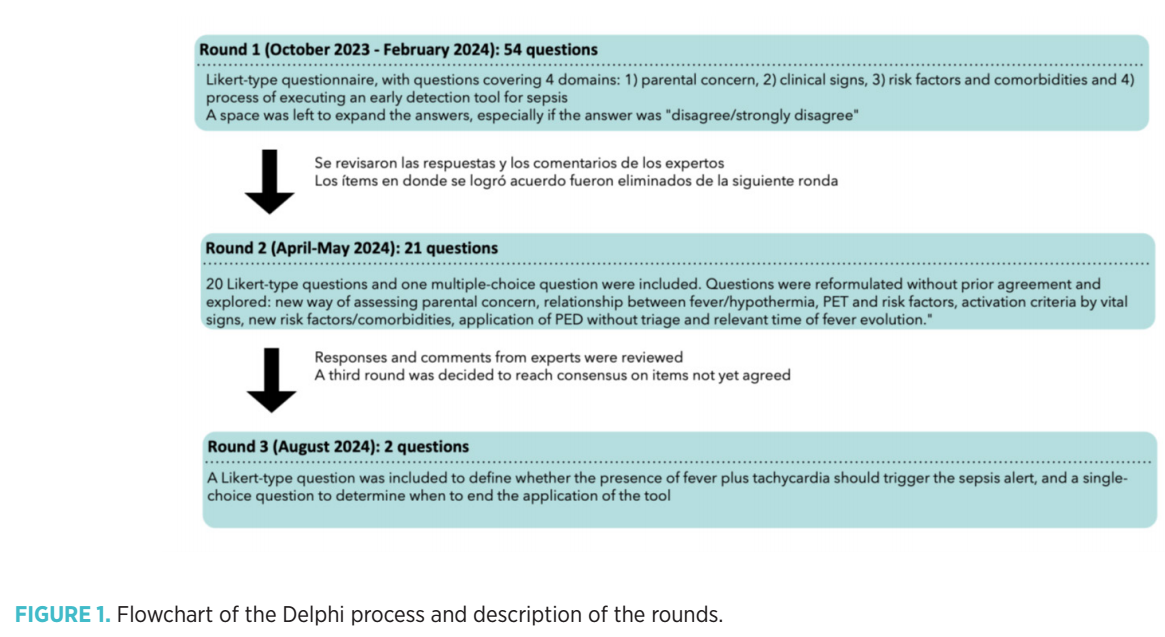
Questions that did not reach consensus in the first round and were re-included were modified before their reintroduction. Modifications included the reformulation of statements, the expansion of information to specify the aspects to be evaluated, and the incorporation of qualitative comments provided by the experts, with the aim of increasing the probability of consensus. Questions suggested by any of the participants were considered for incorporation in subsequent rounds. For single-choice questions, the option with the highest number of votes was considered the result.
In the second round, inquiries were made regarding the location for the application of the tool in PEDs without a triage system and the maximum duration of fever that the tool would consider relevant for its registration as fever. Criteria for alert activation based on altered vital signs were also evaluated. New questions suggested by the experts were incorporated.
In the third round, two new questions were included with the aim of defining when the application of the tool (sepsis screening) should be considered finalized and establishing consensus on whether the presence of fever associated with tachycardia, as the sole altered vital sign, should trigger the sepsis alert.
Construction of the tool
Based on the Delphi results, an interactive tool was developed for the early detection of sepsis upon arrival at the PED. The research team, along with the participation of two bioengineers, defined the admission criteria, as well as the order and relative weight of each identified predictor.
All members of the research team participated in the construction of the tool. The two bioengineers were responsible for the technical development and the formulation of the algorithms that allow calculating the predictors that trigger the alert or rule out the suspicion of sepsis, while the six pediatric emergency physicians interpreted the Delphi results and established the corresponding weightings.
A user interface in Google Sheets was utilized, supported by an application development platform using Google Apps Script.
Results
Participation and scope of consensus
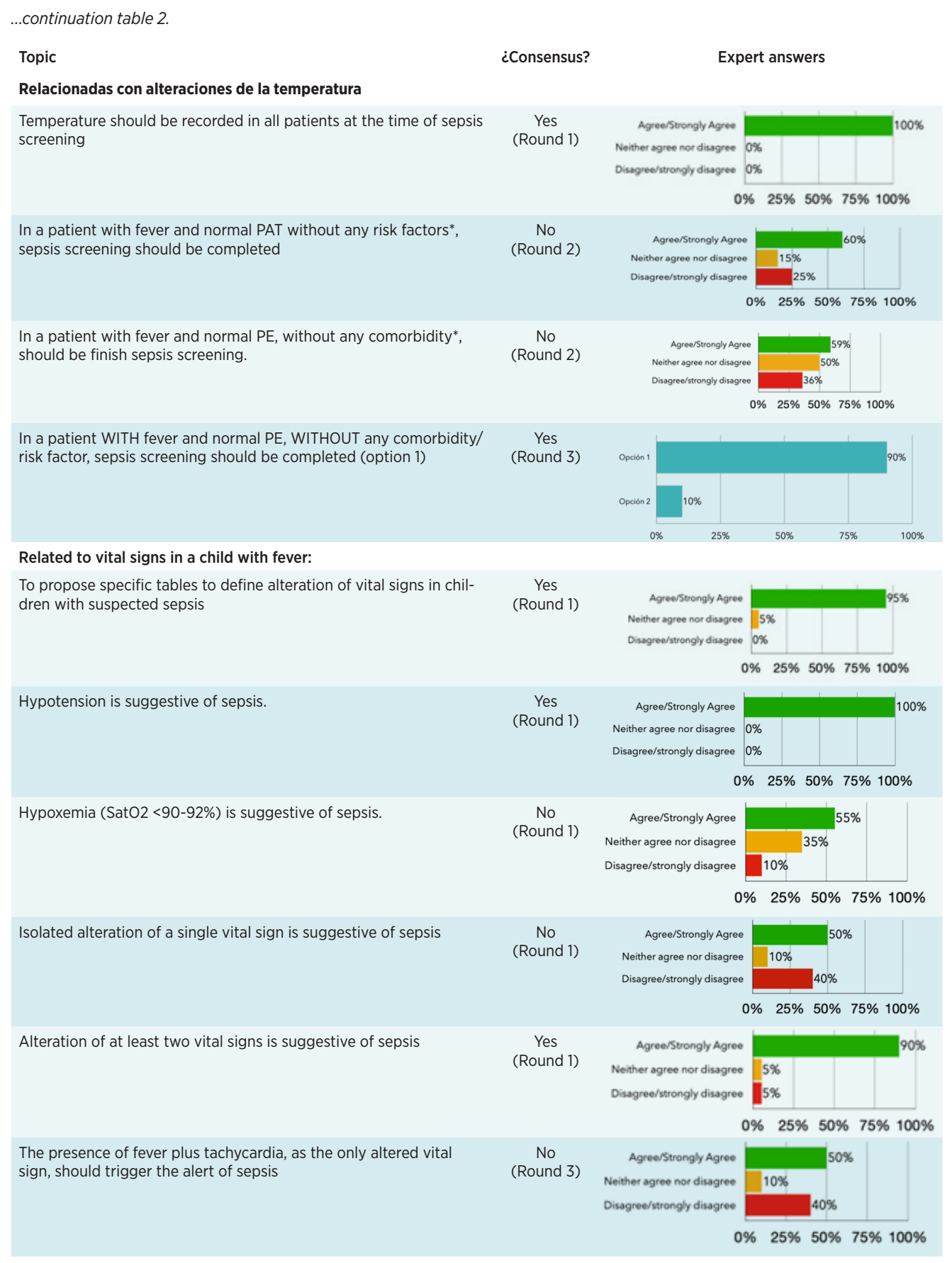
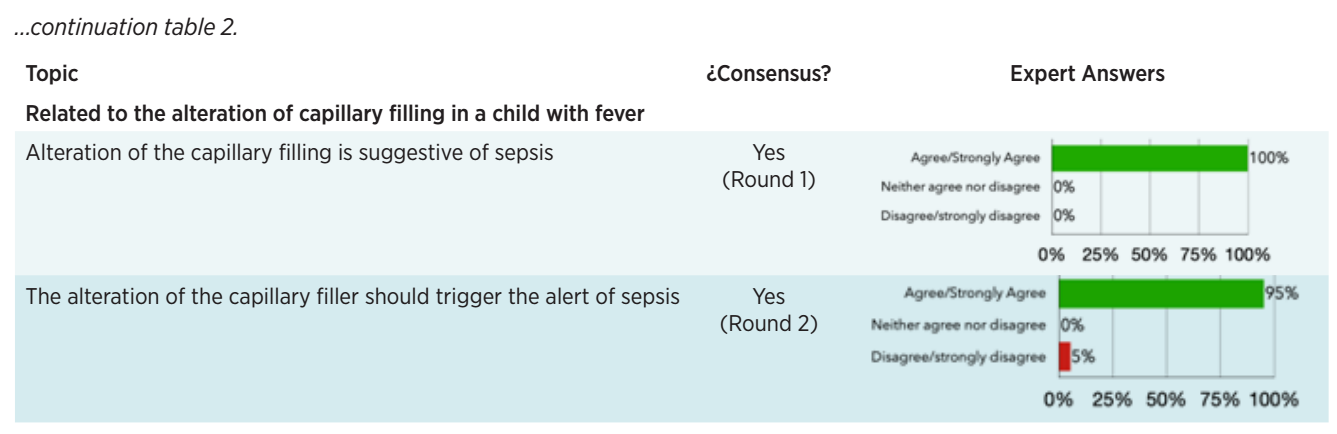
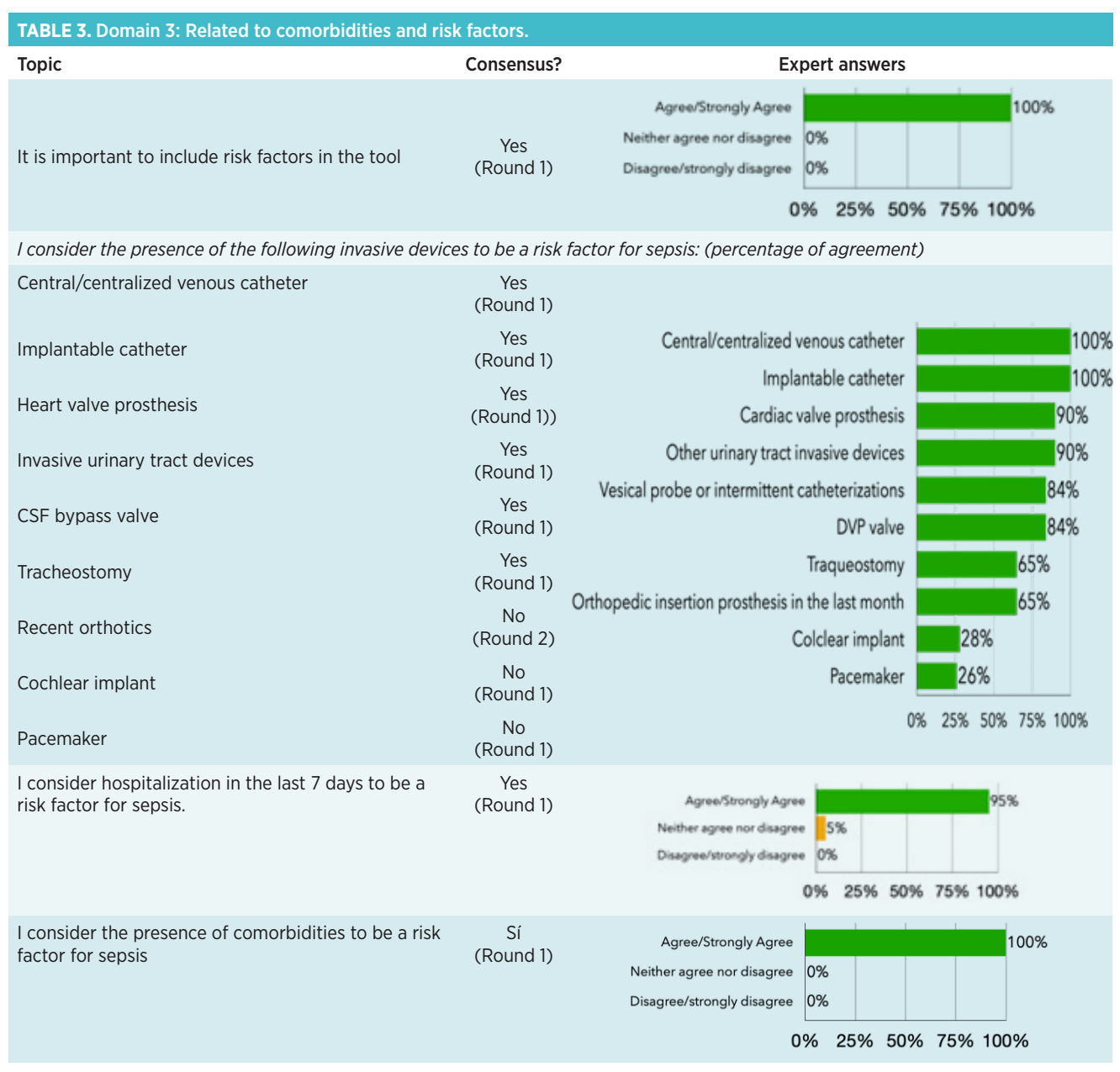
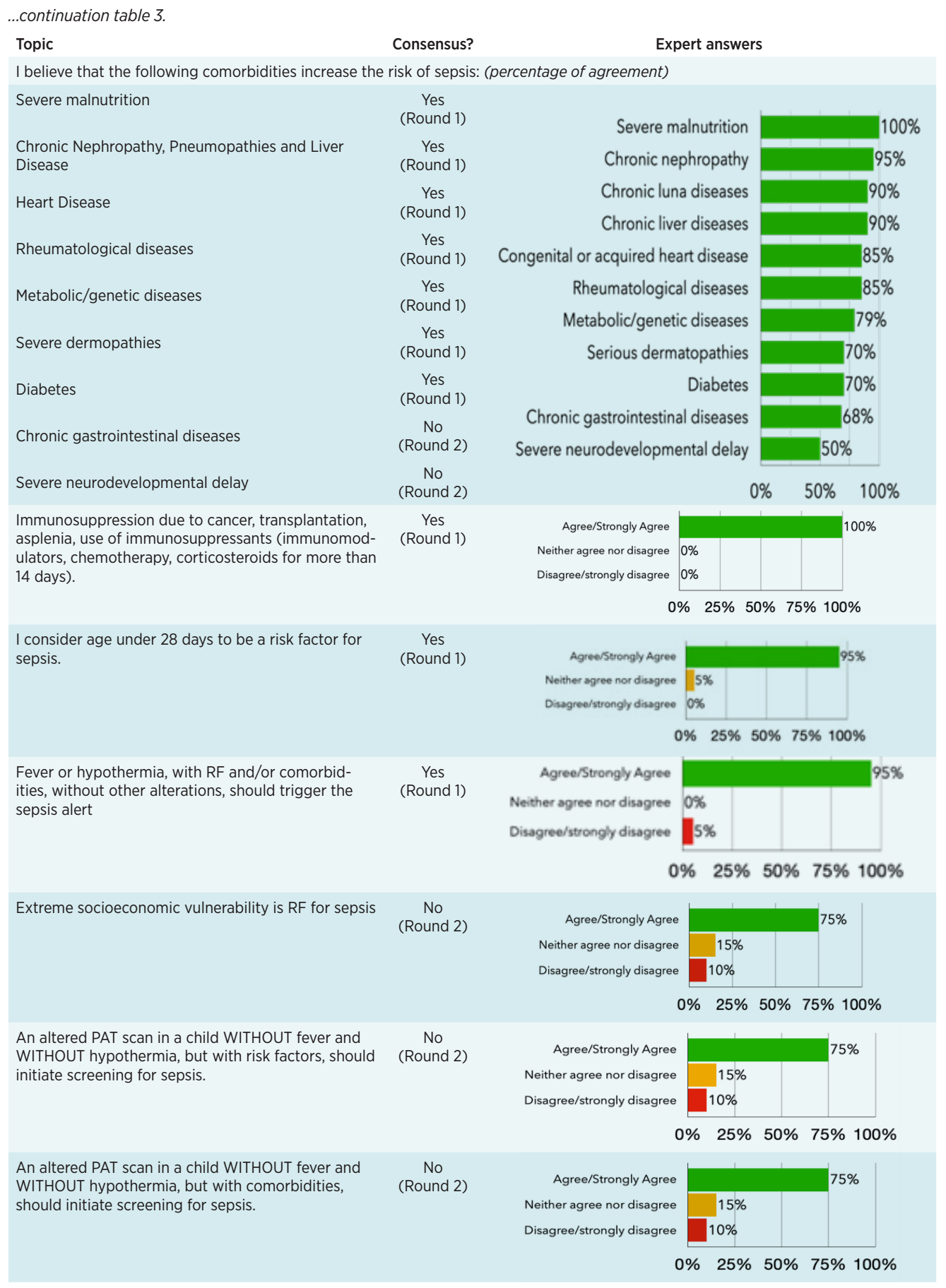
The 20 invited experts completed all three rounds of the Delphi process. A total of 77 items, distributed across four domains, were evaluated. Consensus (≥80% agreement) was reached on 42 items: 34 in the first round, 7 in the second, and 1 in the third. Detailed results are presented in Tables 1 to 4.
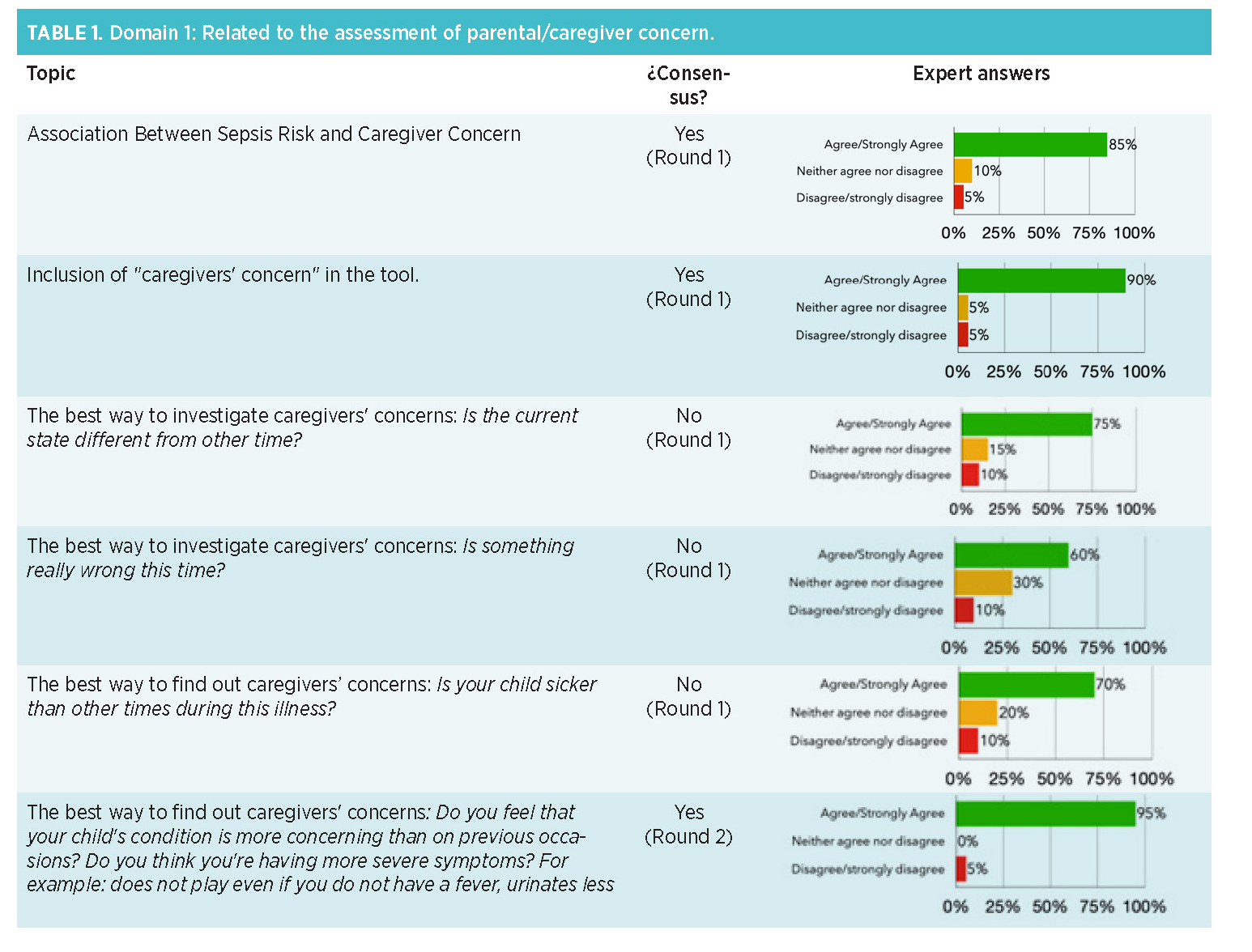
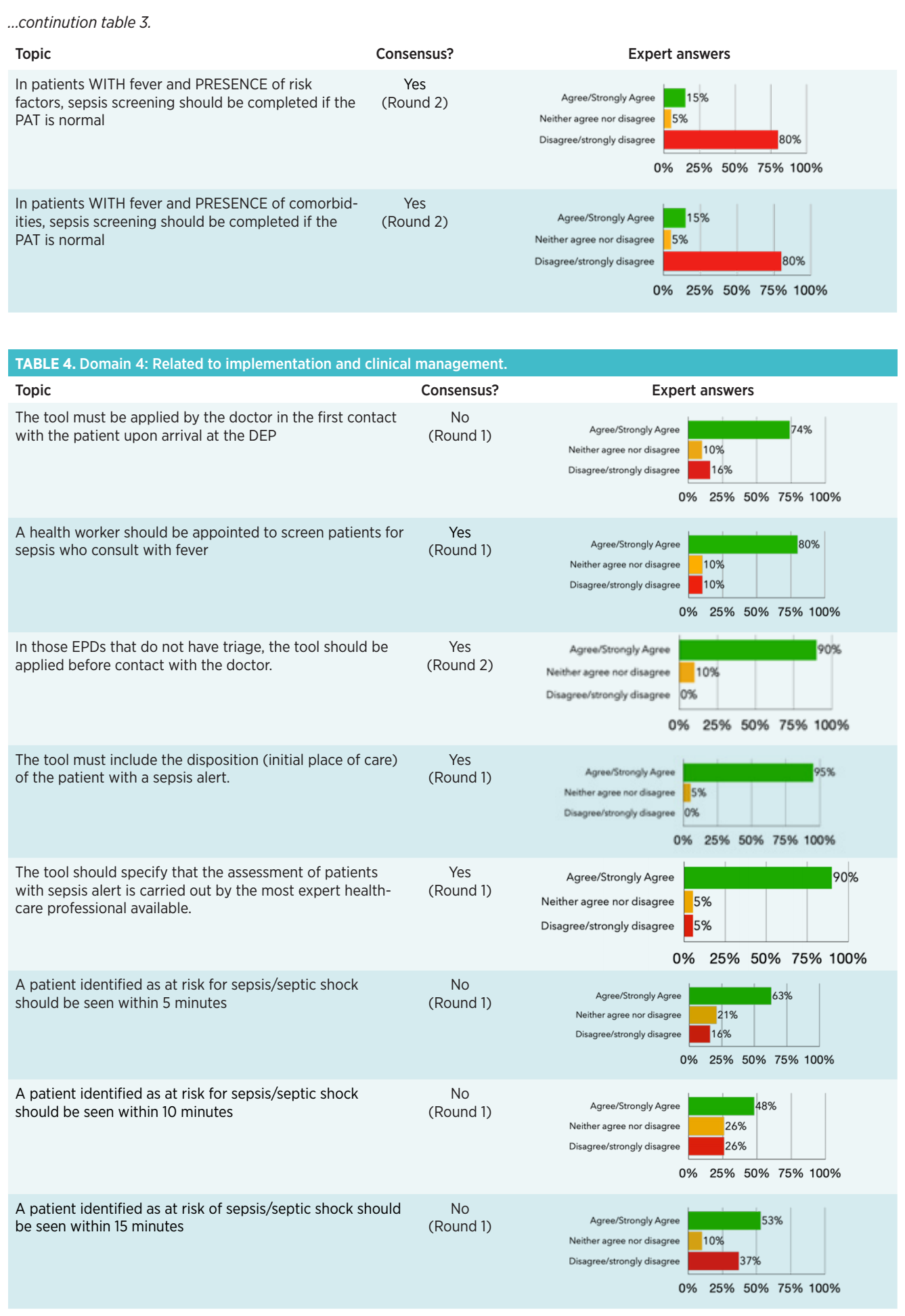
Round 1 (54 items evaluated, 34 with consensus)
Domain 1: caregiver concern
It was agreed that caregiver concern is associated with the risk of sepsis and should be incorporated into the screening tool. However, there was no agreement on the best way to evaluate it (Table 1).
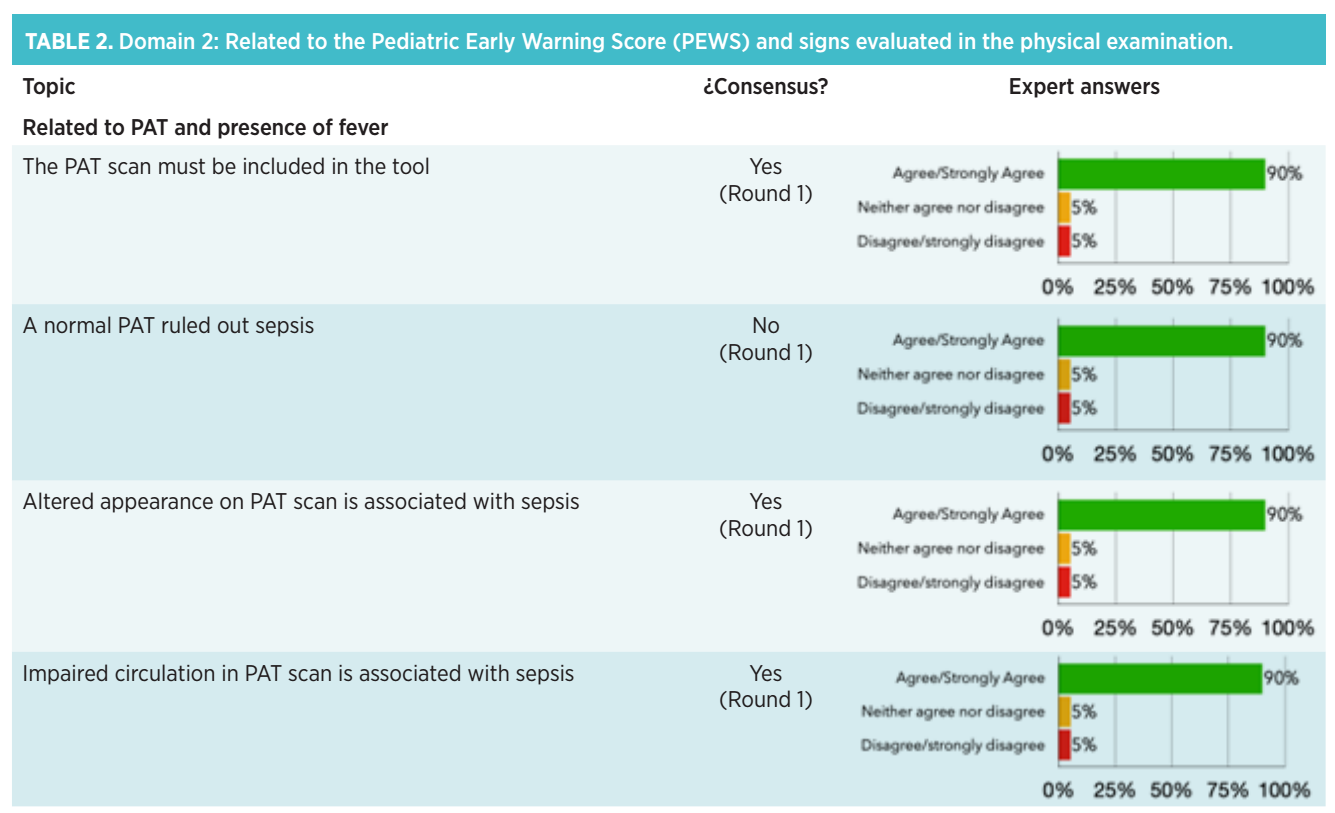
Domain 2: clinical signs
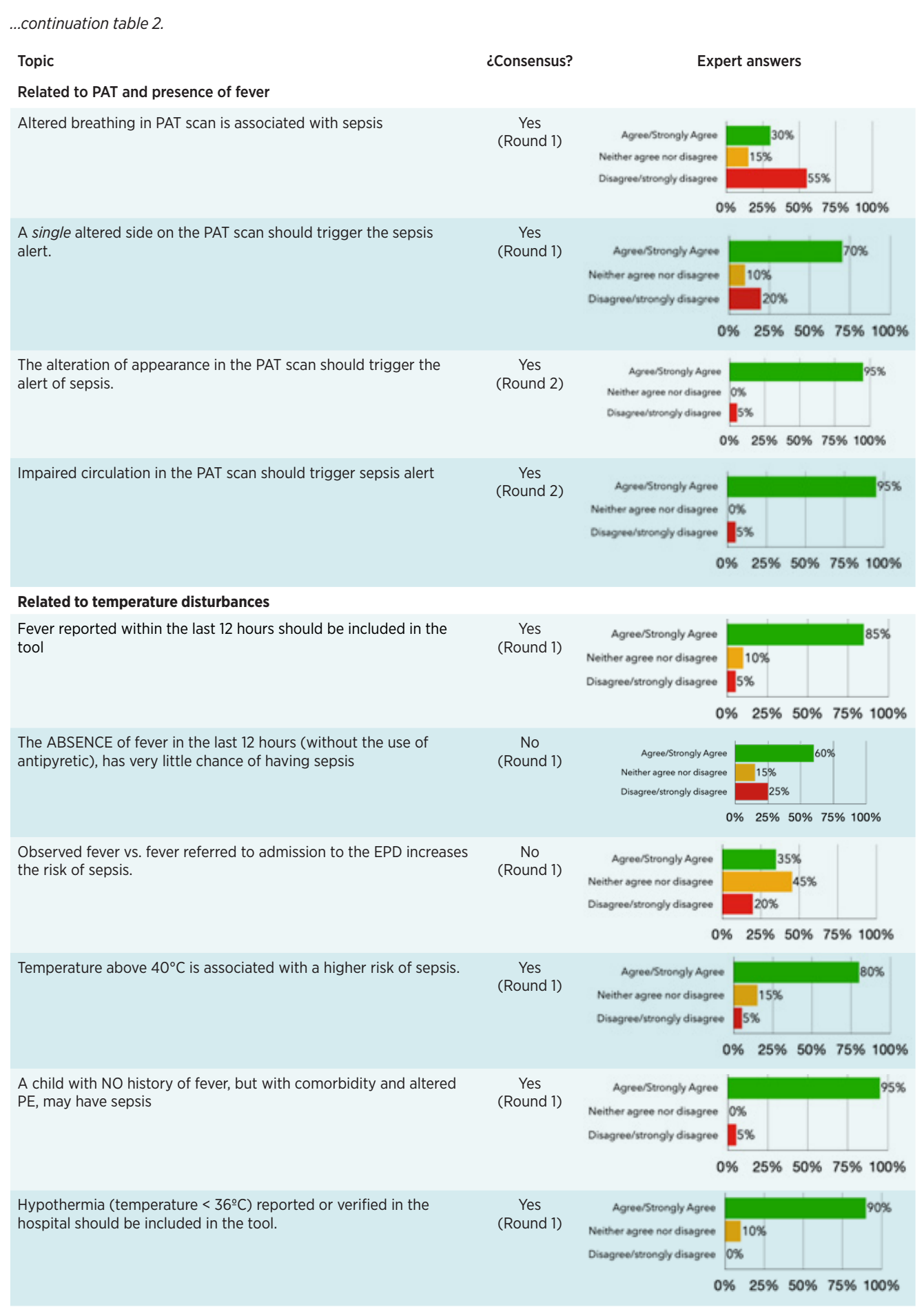
Consensus was reached on the inclusion of the PTT (Pediatric Triangle of Assessment), especially its circulation and appearance components. The value of fever/hypothermia as risk indicators was recognized, with emphasis on temperatures >40°C.
It was agreed that: a) Temperature must be recorded at the time the tool is applied; b) A child without fever but with immunocompromise and an altered PTT may have sepsis; c) A vital signs chart with age-specific ranges is required; d) Alteration of ≥2 vital signs in a febrile patient is highly suggestive of sepsis; e) Hypotension and slow capillary refill time are important indicators (Table 2).
Domain 3: risk factors and comorbidities
Agreement was reached that these must be part of the tool, and that their mere presence in febrile or hypothermic patients justifies the sepsis alert trigger, even if there are no other alterations (Table 3).
Domain 4: operational implementation
Consensus was reached that the tool should: a) Establish the initial disposition of the patient within the PED (Pediatric Emergency Department) and b) Indicate that the evaluation should be performed by the most experienced professional available (Table 4).
Round 2 (21 items evaluated, 7 with consensus)
In the second round, new questions suggested by the experts were incorporated regarding the best way to investigate parental concern, the relationship between fever/hypothermia and the PAT, and risk factors/comorbidities to determine their relevance in the tool’s application. New risk factors and comorbidities suggested by the experts in the previous round were included.
It was agreed: a) on the method for evaluating caregiver concern; b) that it was relevant to include fever or hypothermia (current or in the last 24 hours); c) to initiate screening if the PTT is altered in an afebrile child with risk factors or comorbidities; d) on a sepsis alert trigger for fever associated with an altered circulation or appearance (PTT), or for a slow capillary refill time; and e) that in a PED without a triage system, the tool must be applied before medical contact.
Round 3 (2 items evaluated, 1 with consensus)
It was agreed to finalize screening if a patient with fever and a normal PTT has no comorbidities or risk factors. Consensus was not reached regarding whether current or previous fever, associated with tachycardia, should trigger a sepsis alert as a sole criterion.
Development of the early sepsis detection tool
Based on the consensus items, a screening tool structured in five stages was developed (Figure 2). The application is indicated for patients with:(1) fever or hypothermia(2),evident signs of infection(3), age <28 days, or(4) immunosuppression. The assessment includes:
- Stage 1: Initiation criteria;
- Stage 2: PSS;
- Stage 3: Evaluator and caregiver perception;
- Stage 4: Vital signs and capillary refill;
- Stage 5: Presence of risk factors and comorbidities.
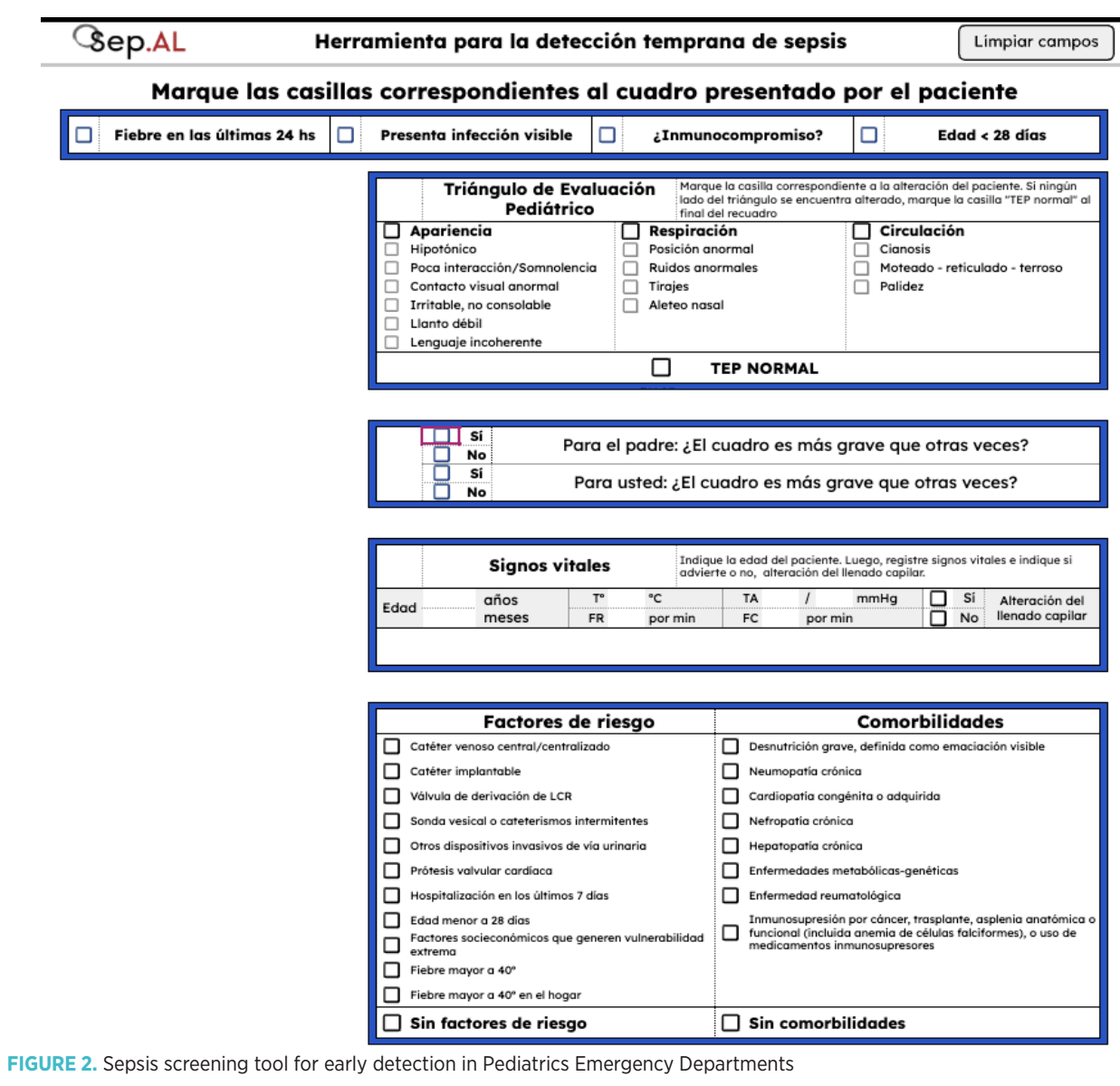
The included predictors were:
Temperature alteration (fever or hypothermia documented in the last 24h), including measurements taken at home or by another health professional before admission; alteration of the PSS (appearance and/or circulation); capillary refill ≥3 seconds; evaluator or caregiver concern; risk factors (age <28 days, fever >40°C, invasive devices, recent hospitalization, social vulnerability); comorbidities (severe malnutrition, immunosuppression, and chronic diseases).
History of fever and the presence of fever in the initial assessment were operationalized as dichotomous qualitative variables (yes/no). Temperature >40°C was also classified as a qualitative variable, as it constitutes an independent risk factor within the tool. In contrast, temperature values recorded at admission were incorporated as a continuous variable.
By consensus among the researchers, two elements were incorporated into the tool. The first was the inclusion of the concept of “visible infection,” defined as the presence of evident clinical signs indicating a localized infectious focus, observable with the naked eye during the physical examination, such as erythema, heat, pain, swelling, suppuration, or lesions compatible with skin and soft tissue infection (e.g., cellulitis, abscess, impetigo, pustules, etc.). The second was the adoption of tables with reference values to determine the alteration of vital signs. For heart and respiratory rate, the cut-off points proposed by Goldstein et al. (2005) were used(13).
For systolic blood pressure, the values from the 5th percentile of the Pediatric Advanced Life Support (PALS)(14) (for those under 12 years of age) and the Parshuram’s Early Warning Score (PEWS) (for those ≥12 years of age) were taken as reference. For diastolic pressure, the 5th percentile values of an out-of-hospital cohort were considered(15). Finally, for mean arterial pressure, the 5th percentile values from the in-hospital Seattle cohort published by Roberts et al. were used(16).
Assignment of weight to predictors and sepsis alert trigger
Weights were assigned to predictors independently, based on evidence and clinical experience, adopting the value with the highest consensus.
An absolute value of 1 point was assigned to the following predictors: altered PAT (circulation or appearance), prolonged capillary refill time, and hypotension. These predictors, by themselves, activate the sepsis alert. The remaining predictors were weighted with values between 0.25 and 0.75 points. The alert is triggered when the total sum reaches or exceeds 1 point.
The tool allows for the alert to be triggered at different stages. In the first stage, it is automatically activated in the presence of a visible infection in immunocompromised patients or those under 28 days of age. In the second stage, it can be activated by findings in the PAT, specifically in the presence of alterations in circulation or appearance. From the third stage onwards, activation occurs when the weighted sum of the predictors reaches or exceeds the defined threshold.
Discussion
Sepsis mortality in developing countries differs significantly from that observed in developed countries (7.1% vs. 28.5%)(17). In a survey conducted by the SLEPE sepsis working group, surveyed physicians indicated a lack of disease recognition as the main barrier to adequate care(18). This difficulty could be related to the absence of triage areas, the lack of a structured identification model, and/or the lack of sufficient training or experience to recognize early clinical signs, thus hindering the rapid categorization of patients and the timely implementation of treatment.
The present study allowed for the development of a screening tool for the early activation of a sepsis alert in children, adapted to the Latin American context. Its construction was based on a Delphi process with regional experts with extensive experience in pediatric emergency departments. This instrument must be validated in different contexts to evaluate its diagnostic capacity and its applicability in clinical practice. The participation of a multidisciplinary panel allowed for the incorporation of both clinical and operational perspectives, reflecting the reality of the PEDs in the region.
Although the Delphi process included three rounds, the third was complementary in nature and was limited to two additional questions: one single-selection question aimed at defining the moment of completion of the tool’s application and another Likert-type question, oriented to exploring an aspect that had not been addressed in previous rounds. Given that this round did not involve the re-evaluation of the main items, the stability of the responses was not considered pertinent in this context, and therefore, an analysis of stability between rounds using concordance tests, such as Kendall’s coefficient, was not performed.
The consensus findings can be grouped into four key domains: caregiver concern, clinical signs, risk factors and comorbidities, and operational aspects of implementation. Based on these domains, predictors and sepsis alert triggering conditions were defined, structured in five stages.
Regarding temperature, the presence of fever or hypothermia in the last 24 hours was defined as altered, including records taken by caregivers or in other services. This decision aimed not to underestimate patients with febrile conditions that have spontaneously resolved or after initial interventions. Furthermore, it was decided to incorporate “visible infection” as an independent predictor of altered temperature, recognizing that some patients may not present with fever upon initial evaluation.
In the domain of clinical signs, the PTT (Pediatric Triangle Assessment) was positively valued by experts as a validated tool for rapid initial evaluation of the pediatric patient using sight and hearing (without touching the patient), in order to perform a pathophysiological classification, establish a level of severity, and determine the urgency of treatment(19). To define the alteration of vital signs, reference sources differentiated by age group were agreed upon, considering the percentiles recommended by PALS, PEWS, and recent population studies. Arterial blood pressure reference values were taken from a systematic review that concluded that the PALS cutoff value showed good agreement with population fifth percentile values in children under 12 years of age, while PEWS showed better agreement in those over 12 years of age(20). For mean arterial pressure, the 5th percentile from a hospital cohort of more than 85,000 pediatric patients was used, where it was demonstrated that mean pressure below p5 better identifies clinically significant hypotensive episodes(16). For diastolic arterial pressure, the p5 values derived from an out-of-hospital cohort of more than 340,000 pediatric encounters were taken as reference, given the absence of validated values in the in-hospital context(15).
The assessment of capillary refill time was included as an indicator of peripheral perfusion, given its clinical utility in the initial evaluation of children with suspected sepsis or septic shock, as agreed upon by the experts(21–23). Different techniques and sites exist for its measurement; however, there are no studies comparing the different techniques, and the values obtained can vary according to the measurement site, the duration of the applied pressure, and the body and ambient temperature.(24,25). These aspects should be considered in the training for the application of the tool.
The lack of consensus regarding the statement “hypoxemia is suggestive of sepsis” was consistent with the assessment of respiratory alterations within the PAT, given that only 35% of experts considered altered breathing to be associated with sepsis in this context. While hypoxemia may present in more advanced stages of sepsis, it is also a frequent finding in acute respiratory pathologies, both infectious and non-infectious (e.g., bronchiolitis or asthma attacks). It is likely that, for this reason, the experts considered that its use as an early alert trigger could generate unnecessary activations.
In the domain of clinical perception, the experts gave value to parental concern, despite the fact that as an independent variable it had not been consistently associated with an increased risk of sepsis, nor did it demonstrate improvement in clinical prediction models in prospective studies in the PED [Pediatric Emergency Department] (26,27). Recently, an Australian study showed that concern expressed by caregivers—investigated by the direct question, “Are you worried that your child is getting worse?”— is independently associated with severe outcomes such as intensive care unit admission and the need for mechanical ventilation, even after adjusting for abnormal vital signs(28). These findings highlight the value of this subjective perception as an early sign of clinical deterioration and support its systematic incorporation into the initial assessment in the PED. The latest recommendations from the American College of Critical Care Medicine and the Sepsis Survival Campaign guidelines promote the institutional implementation of sepsis detection tools, but do not include parental concerns in their directives. However, early detection instruments developed in the United Kingdom (Sepsis Trust)(29) and Australia (New South Wales)(30) list parental concern as a feature that could help clinicians think about sepsis. The evaluator’s perception or the healthcare professional’s (physician or nurse) clinical intuition has demonstrated value as a predictor of sepsis and severe bacterial infection, especially when integrated into clinical models, which is why, by agreement among the researchers, it was defined to include it in the early sepsis detection tool(31–33).
Regarding risk factors and comorbidities, consensus was reached that their presence in febrile or hypothermic patients warrants initiating sepsis screening, even in the absence of other findings. Factors included are immunosuppressions, age under 28 days, fever above 40°C, presence of invasive devices, severe malnutrition, and conditions of extreme social vulnerability.
Operationally, it was established that the tool should be applied from the initial patient contact, even in services that do not have a formal triage system, and that it must be used by the most qualified professional available. This definition aims to ensure its applicability without delays in care, attempting to overcome the barriers that frequently exist in our environment. Furthermore, this is especially true if we consider the survey conducted by our sepsis working group in 2021 where, out of 898 physicians—who mostly work in third-level hospitals in LATAM—only 61% reported having triage available(18).
The selected experts represented a diversity of work contexts and professional roles, including public, private, academic, and consulting institutions. Given that many of them work in more than one setting, formal differentiation by type of institution was not considered necessary. This criterion allowed for a broad and comprehensive view of pediatric sepsis management in the region.
A possible limitation of the study is the heterogeneous geographic representation of the expert panel. The selection prioritized recognized clinical and academic experience in pediatric sepsis over territorial distribution due to the limited number of pediatric emergency physicians with this specialization in Latin America. This approach allowed for the formation of a panel with high technical competence, although the possibility of a geographic representation bias is recognized.
Another limitation is inherent to the method used: the modified Delphi. By relying on obtaining consensus among experts, this method may reflect individual preferences or judgment biases, as well as the influence of the questionnaire design on responses. While this approach facilitates the synthesis of expert knowledge in the absence of solid evidence, it does not replace the empirical validation of the tool in different contexts and regions, especially in scenarios with and without triage systems to ensure its applicability and generalization.
The assignment of scores to the predictors allowed for structuring a stepwise activation of the alert: some elements activate the alert by themselves (altered TEP, prolonged capillary refill, hypotension), while others add weighted points, activating the alert when the accumulated total reaches or exceeds the cutoff value. This gradual logic seeks to obtain a sensitive evaluation without overloading the system with false alerts.
Regarding its future application, the authors consider it feasible to use this tool in all febrile children upon admission to the emergency department. In patients older than 28 days, without risk factors, comorbidities, or signs of visible infection, and presenting a stable PAT, early interruption of screening is contemplated without the need to record additional variables, such as blood pressure, oxygen saturation, respiratory rate, or capillary refill time. This possible interruption was specifically explored during the Delphi process. In those cases, said assessments would be integrated, as established in each institution, into the usual triage process or subsequent medical evaluation.
The tool not only aims to improve early sepsis identification but also to facilitate immediate clinical decision-making. By being structured in progressive stages and allowing early alerts, even before medical contact, it could be operationally integrated into the flow of care in pediatric emergency departments (PEDs), especially those with high-demand and limited resources. Its clear and hierarchical clinical criteria favor its understanding by different professional profiles, which could increase its clinical acceptability. Its design and interactivity allow for intuitive application and suggest that it could be reproducible after brief training programs, an aspect that will need to be evaluated in the validation stage.
Finally, it is worth noting that the development of this tool represents an effort to adapt sepsis screening to the clinical and epidemiological realities of the region. The incorporation of frequently underestimated variables, such as parental concern and evaluator perception, supported by recent evidence, could add value in the early detection of clinical deterioration in pediatrics. Future validation will allow determining its real utility and its impact on the care of children with sepsis in Latin America.
Conclusion
A tool for the early identification of pediatric sepsis was developed in Latin America through a Delphi process with regional experts. This tool represents a first step towards clinical consensus in resource-limited settings. Its future validation will be essential to determine its diagnostic accuracy and utility in clinical practice.
Acknowledgements
The authors thank the valuable contribution of the experts who participated in responding to the Delphi questionnaire: Vladimir Basurto, Joao Carlos Batista Santana, Lic. Natalia Cardozo, Ida Concha, Nils Casson, Joelma Gonçalves Martin, Sebastian Gonzalez Dambrauskas, Maria Eugenia Gordillo, Patricia Dall’Orso, Ricardo Iramain, Roberto Jabornisky, Juan Camilo Jaramillo, Victor Olivar, Javier Prego, Jefferson Piva, Pedro Rino, Hany Simon Jr., Vanessa Soares Lanziotti, Daniela C. Souza, and Adriana Yock Corrales.
Funding
No funding was received for the research, authorship, and/or publication of this article.
Author contributions
Viviana Pavlicich: Conceptualization, Methodology, Writing, Review, and Editing.
Natalia Lopera-Múnera: Conceptualization, Methodology, Writing, Original draft, and Editing.
Guillermo Kohn-Loncarica: Conceptualization, Methodology, Writing, Review, and Editing.
Ana Paula Pereira-da-Silva: Conceptualization, Methodology, Writing, Review, and Editing.
Patricia Lago: Conceptualization, Methodology, Writing, Review, and Editing.
Santiago Daniel Borghi: Technical development of the tool, Conceptualization.
Alejandro Zavala: Technical development of the tool, Conceptualization.
Ana Fustiñana: Conceptualization, Methodology, Writing, Review, Editing, and Supervision.
All authors have read and agreed to the published version of the manuscript.
Conflicts of interest
The authors declare that there are no commercial or financial conflicts of interest for this research.
Use of artificial intelligence tools
The authors declare that no artificial intelligence tool (such as ChatGPT, Copilot, Gemini, or others) has been used in the writing, analysis, or review of this article.
References
- Harley A, Schlapbach LJ, Johnston ANB, Massey D. Challenges in the recognition and management of paediatric sepsis — The journey. Australas Emerg Care. 2022;25(1):23-29. Available from: https://doi.org/10.1016/j.auec.2021.03.006.
- Paul R. Recognition, Diagnostics, and Management of Pediatric Severe Sepsis and Septic Shock in the Emergency Department. Pediatr Clin North Am. 2018;65(6):1107-1118. Available from: https://doi.org/10.1016/j.pcl.2018.07.012.
- Carrol ED, Ranjit S, Menon K, et al. Operationalizing Appropriate Sepsis Definitions in Children Worldwide: Considerations for the Pediatric Sepsis Definition Taskforce. Pediatric Critical Care Medicine. 2023;24(6):e263-e271.
- Lopera-Múnera N, Pavlicich V. Estado actual del desarrollo de las herramientas de detección inicial de la sepsis en los departamentos de emergencias pediátricos. Emerg Pediatr. 2023;2(2):124-131.
- Eisenberg MA, Balamuth F. Pediatric sepsis screening in US hospitals. Pediatr Res. 2022;91(2):351-358. Available from: https://doi.org/10.1038/s41390-021-01708-y.
- Weiss SL, Peters MJ, Alhazzani W, et al. Surviving sepsis campaign international guidelines for the management of septic shock and sepsis-associated organ dysfunction in children. Pediatr Crit Care Med. 2020;21(2):e52-e106. Available from: https://doi.org/10.1097/PCC.0000000000002198.
- Fernández-Sarmiento J, De Souza DC, Martinez A, et al. Latin American Consensus on the Management of Sepsis in Children: Sociedad Latinoamericana de Cuidados Intensivos Pediátricos [Latin American Pediatric Intensive Care Society] (SLACIP) Task Force: Executive Summary. J Intensive Care Med. 2022;37(6):753-763.
- Lopera Múnera N, Chávez ME, Samaniego L, Morilla Sanabria LP, Mesquita M, Pavlicich V. Development, Implementation, and Evaluation of an Early Sepsis Screening Tool at Triage in a Pediatric Emergency Department in Latin America. Pediatr Emerg Care. 2025. Available from: https://doi.org/10.1097/PEC.0000000000003399.
- Helmer-Hirschberg O. 1967 Analysis of the Future The Delphi Method. 1967.
- Drumm S, Bradley C, Moriarty F. ‘More of an art than a science’? The development, design and mechanics of the Delphi Technique. Research in Social and Administrative Pharmacy. 2022;18(1):2230-2236. Available from: https://doi.org/10.1016/j.sapharm.2021.06.027.
- Diamond IR, Grant RC, Feldman BM, et al. Defining consensus: A systematic review recommends methodologic criteria for reporting of Delphi studies. J Clin Epidemiol. 2014;67(4):401-409. Available from: https://doi.org/10.1016/j.jclinepi.2013.12.002.
- Hsu CC, Sandford BA. The Delphi Technique: Making Sense of Consensus. Practical Assessment, Research, and Evaluation. 2007;12(10). Available from: https://doi.org/10.7275/pdz9-th90.
- Goldstein B, Giroir B, Randolph A. International pediatric sepsis consensus conference: definitions for sepsis and organ dysfunction in pediatrics. Pediatr Crit Care Med. 2005;6(1):2-8. Available from: https://doi.org/10.1097/01.PCC.0000149131.72248.E6.
- Disque K. Pediatric Advanced Life Support (PALS) Provider Handbook 2020-2025. Satori Continuum Publishing; 2021.
- Ramgopal S, Sepanski RJ, Crowe RP, Martin-Gill C. Age-based centiles for diastolic blood pressure among children in the out-of-hospital emergency setting. JACEP Open. 2023;4(2). Available from: https://doi.org/10.1002/emp2.12915.
- Roberts JS, Yanay O, Barry D. Age-Based Percentiles of Measured Mean Arterial Pressure in Pediatric Patients in a Hospital Setting. Pediatric Critical Care Medicine. 2020;21(9):E759-E768. Available from: https://doi.org/10.1097/PCC.0000000000002495.
- Sanchez-Pinto LN, Bennett TD, Dewitt PE, et al. Development and Validation of the Phoenix Criteria for Pediatric Sepsis and Septic Shock. JAMA. 2024;331(8):675-686. Available from: https://doi.org/10.1001/jama.2024.0196.
- Kohn-Loncarica GA, Fustiñana AL, Jabornisky RM, et al. How Are Clinicians Treating Children With Sepsis in Emergency Departments in Latin America? An International Multicenter Survey. Pediatr Emerg Care. 2021;37(11):e757-e763.
- Dieckmann RA, Brownstein D, Gausche-Hill M. The Pediatric Assessment Triangle A Novel Approach for the Rapid Evaluation of Children. Pediatr Emerg Care. 2010;26(4):312-315.
- Hagedoorn NN, Zachariasse JM, Moll HA. A comparison of clinical paediatric guidelines for hypotension with population-based lower centiles: A systematic review. Crit Care. 2019;23(1). Available from: https://doi.org/10.1186/s13054-019-2653-9.
- Lamprea S, Fernández-Sarmiento J, Barrera S, et al. Capillary refill time in sepsis: A useful and easily accessible tool for evaluating perfusion in children. Front Pediatr. 2022;10:e1035567. Available from: https://doi.org/10.3389/fped.2022.1035567.
- Hernandez G, Carmona P, Ait-Oufella H. Monitoring capillary refill time in septic shock. Intensive Care Med. 2024;50(4):580-582. Available from: https://doi.org/10.1007/s00134-024-07361-3.
- Hernández G, Castro R, Bakker J. Capillary refill time: The missing link between macrocirculation and microcirculation in septic shock? J Thorac Dis. 2020;12(3):1127-1129. Available from: https://doi.org/10.21037/jtd.2019.12.102.
- Fleming S, Van Den Bruel A, Gill PJ, Thompson M. Capillary refill time in sick children: A clinical guide for general practice. British Journal of General Practice. 2016;66(652):587-588. Available from: https://doi.org/10.3399/bjgp16X687925.
- Fleming S, Gill P, Jones C, et al. Validity and reliability of the colour component of capillary refill time in acutely ill children: a systematic review. Arch Dis Child. 2015;100(11):980-985. Available from: https://doi.org/10.1136/archdischild-2015-308871.
- Urbane UN, Gaidule-Logina D, Gardovska D, Pavare J. Value of parental concern and clinician’s gut feeling in recognition of serious bacterial infections: A prospective observational study. BMC Pediatr. 2019;19(1):219. Available from: https://doi.org/10.1186/s12887-019-1591-7.
- Sever Z, Schlapbach LJ, Jessup M, George S, Harley A. Parental and healthcare professional concern in the diagnosis of paediatric sepsis: A protocol for a prospective multicentre observational study. BMJ Open. 2021;11(9):e045910. Available from: https://doi.org/10.1136/bmjopen-2020-045910.
- Mills E, Lin P, Asghari-Jafarabadi M, West A, Craig S. Association between caregiver concern for clinical deterioration and critical illness in children presenting to hospital: a prospective cohort study. Lancet Child Adolesc Health. 2025. Available from: https://doi.org/10.1016/S2352-4642(25)00098-7.
- UK Sepsis Trust. Sepsis screening acute assessment (The Sepsis Six – Age 5–11) [Internet]. London: UK Sepsis Trust; 2024 [citado 2025 ago 3]. Available from: https://sepsistrust.org/wp-content/uploads/2024/08/SEPSIS-Trust-Screening-Acute-Tool-Kits-5-11-2024.pdf.
- Children’s Health Queensland. Paediatric Sepsis Pathway (version 2.00) [Internet]. Queensland: Queensland Paediatric Sepsis Program; 2023 [citado 2025 ago 3]. Available from: https://www.childrens.health.qld.gov.au/__data/assets/pdf_file/0025/258325/paediatric-sepsis-pathway.pdf.
- Van Den Bruel A, Thompson M, Buntinx F, Mant D. Clinicians’ gut feeling about serious infections in children: Observational study. BMJ. 2012;345:e6144. Available from: https://doi.org/10.1136/bmj.e6144.
- Van den Bruel A, Aertgeerts B, Bruyninckx R, Aerts M, Buntinx F. Signs and symptoms for diagnosis of serious infections in children: a prospective study in primary care. Br J Gen Pract. 2007;57(540):538-46.
- Urbane UN, Petrosina E, Zavadska D, Pavare J. Integrating Clinical Signs at Presentation and Clinician’s Non-analytical Reasoning in Prediction Models for Serious Bacterial Infection in Febrile Children Presenting to Emergency Department. Front Pediatr. 2022;10:786795. Available from: https://doi.org/10.3389/fped.2022.786795.
Explorar
Artículos
Volúmenes
Sobre la revista
Más leídos
Emergencias Pediátricas
Emergencias Pediátricas
Emergencias Pediátricas
1º Congreso Mundial de Emergencias Pediátricas
Emergencias Pediátricas
Una nueva mirada a la vía aérea pediátrica: secuencia de intubación diferida como alternativa segura en situaciones de urgencias
Emergencias Pediátricas